सभी किताबें

पेशेवर

1 Markets I: The Ecosystem and Exchange-Traded Marketsबाज़ार ऑनलाइन 2 Markets II: Rates, FX and Creditबाज़ार ऑनलाइन 3 Markets III: Commodities, Energy and Cryptoबाज़ार ऑनलाइन 4 Quantitative Methodsविधियाँ ऑनलाइन 5 Derivatives and Volatilityडेरिवेटिव्स ऑनलाइन 6 Rates, Credit, XVA and Riskब्याज दरें, क्रेडिट और जोखिम ऑनलाइन 7 Research Craft: Predictors, Backtests, Measurement, Portfoliosअनुसंधान ऑनलाइन 8 Strategies I: Equities and Futuresरणनीतियाँ ऑनलाइन 9 Strategies II: Volatility, Relative Value, Macro and the Bank Desksरणनीतियाँ ऑनलाइन 10 Microstructure and Executionनिष्पादन ऑनलाइन 11 Market Making and High-Frequency Tradingमार्केट मेकिंग ऑनलाइन 12 Machine Learning for Marketsमशीन लर्निंग ऑनलाइन 13 Low-Latency Softwareतकनीक ऑनलाइन 14 Networks, Hardware and Trading Infrastructureतकनीक ऑनलाइन 15 Research, Data and Risk Platformsतकनीक ऑनलाइन 16 The Desk and the Firmफ़र्म ऑनलाइन 17 The Industry: Firms, Roles and Careersकरियर ऑनलाइन 18 Interviews I: Maths, Probability and Speedकरियर ऑनलाइन 19 Interviews II: Markets, Trading Games and the Final Roundकरियर ऑनलाइन 20 Interviews III: Codeकरियर ऑनलाइन
ऐप्स परिचय Coach लॉग इन पढ़ना शुरू करें

Computer Science · शब्दावली

Cycles per instruction, performance equation क्या है?

अन्य नाम: cycles per instruction · performance equation

Definition 11.14 University Computer Science — Year 2 · अध्याय 11 — The Processor: Datapath, Control and Pipelining

The cycles per instruction (CPI) of a run is its number of cycles divided by its number of instructions. The performance equation gives the time of a run:
time=instructions×CPI×cycle time.\text{time} = \text{instructions} \times \text{CPI} \times \text{cycle time}.
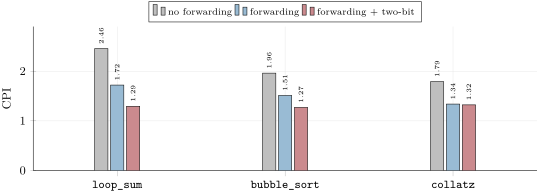
The CPI of . Forwarding helps every program; the predictor helps the two loops, and hardly collatz.S, whose branches follow the data.

The CPI of Output 11.7. Forwarding helps every program; the predictor helps the two loops, and hardly collatz.S, whose branches follow the data.
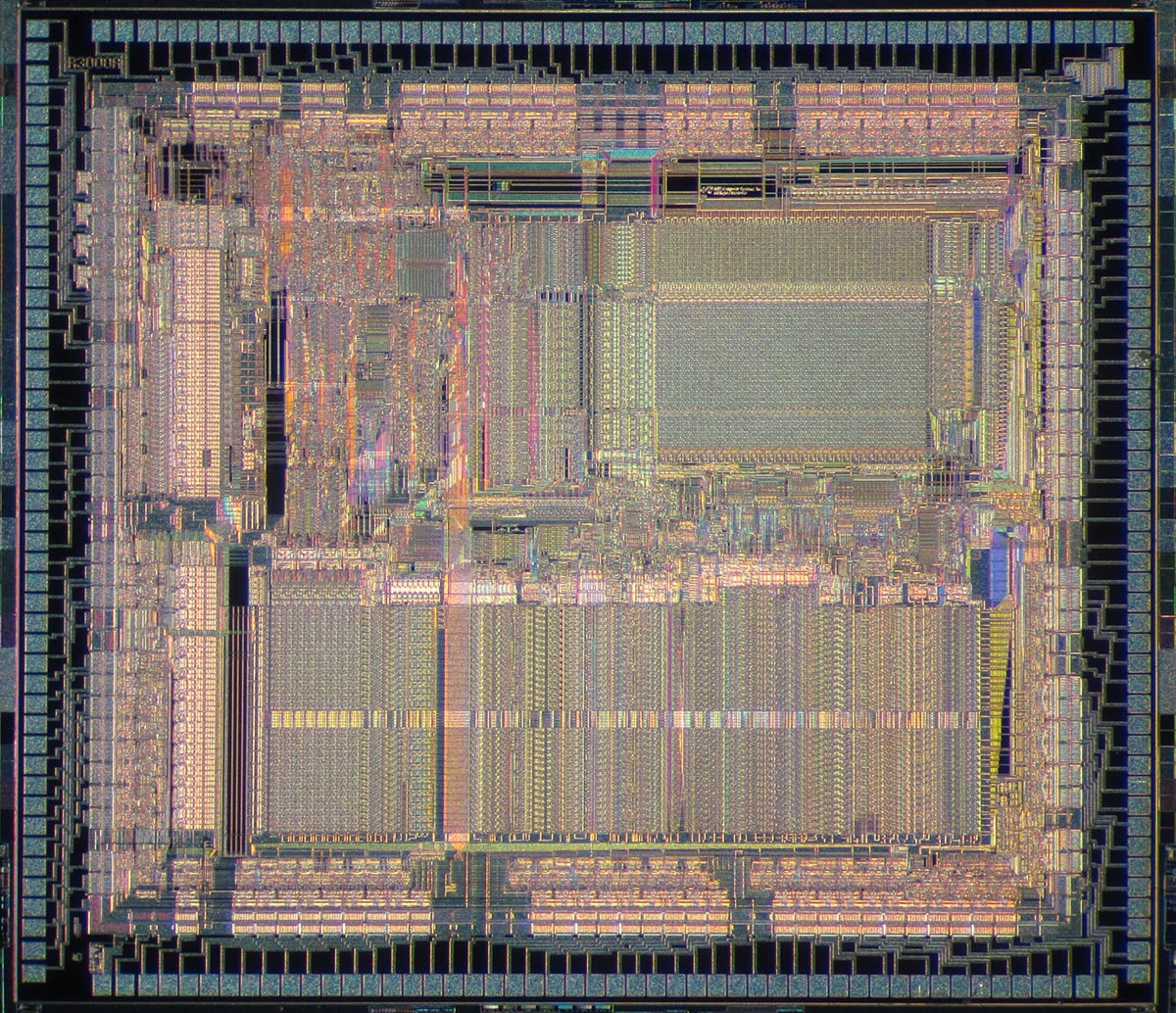
The die of a MIPS R3000A, a 32-bit RISC processor, photographed on its wafer. The squares along the edges are the pads wired to the package; the regular blocks are arrays of identical cells, and the irregular regions are logic. Photograph: Pauli Rautakorpi, CC BY 3.0.
अध्याय में पढ़ें →