
جميع الكتب

مهني

1 Markets I: The Ecosystem and Exchange-Traded Marketsالأسواق عبر الإنترنت 2 Markets II: Rates, FX and Creditالأسواق عبر الإنترنت 3 Markets III: Commodities, Energy and Cryptoالأسواق عبر الإنترنت 4 Quantitative Methodsالأساليب عبر الإنترنت 5 Derivatives and Volatilityالمشتقات عبر الإنترنت 6 Rates, Credit, XVA and Riskالفائدة والائتمان والمخاطر عبر الإنترنت 7 Research Craft: Predictors, Backtests, Measurement, Portfoliosالبحث عبر الإنترنت 8 Strategies I: Equities and Futuresالاستراتيجيات عبر الإنترنت 9 Strategies II: Volatility, Relative Value, Macro and the Bank Desksالاستراتيجيات عبر الإنترنت 10 Microstructure and Executionالتنفيذ عبر الإنترنت 11 Market Making and High-Frequency Tradingصناعة السوق عبر الإنترنت 12 Machine Learning for Marketsتعلم الآلة عبر الإنترنت 13 Low-Latency Softwareالتكنولوجيا عبر الإنترنت 14 Networks, Hardware and Trading Infrastructureالتكنولوجيا عبر الإنترنت 15 Research, Data and Risk Platformsالتكنولوجيا عبر الإنترنت 16 The Desk and the Firmالشركة عبر الإنترنت 17 The Industry: Firms, Roles and Careersالمسارات المهنية عبر الإنترنت 18 Interviews I: Maths, Probability and Speedالمسارات المهنية عبر الإنترنت 19 Interviews II: Markets, Trading Games and the Final Roundالمسارات المهنية عبر الإنترنت 20 Interviews III: Codeالمسارات المهنية عبر الإنترنت
التطبيقات حول المدرب تسجيل الدخول ابدأ القراءة

Computer Science · المسرد

ما معنى Modularity, coupling, cohesion, information hiding, dependency inversion؟

يُعرف أيضًا باسم: modularity · coupling · cohesion · information hiding · dependency inversion

Definition 30.3 University Computer Science — Year 3 · الفصل 30 — Software Engineering: Design, Testing and Maintenance

Modularity is the division of a program into modules that can be written, understood, tested and changed separately. Coupling is the degree to which one module depends on the details of another; cohesion is the degree to which the parts of one module serve a single purpose. Information hiding is the choice of module boundaries so that each module hides a design decision likely to change, behind an interface that does not reveal it. Dependency inversion makes a high-level module and a low-level one both depend on an interface owned by the high-level side, instead of the high-level module depending on the low-level one.
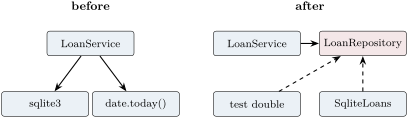
Dependency inversion. Before, the service depends on the storage library and on the system clock. After, it depends on an interface that it owns; the SQLite class and any test double depend on that interface, and the arrows from the low-level side point up.
اقرأ في الفصل →