
सभी किताबें

पेशेवर

1 Markets I: The Ecosystem and Exchange-Traded Marketsबाज़ार ऑनलाइन 2 Markets II: Rates, FX and Creditबाज़ार ऑनलाइन 3 Markets III: Commodities, Energy and Cryptoबाज़ार ऑनलाइन 4 Quantitative Methodsविधियाँ ऑनलाइन 5 Derivatives and Volatilityडेरिवेटिव्स ऑनलाइन 6 Rates, Credit, XVA and Riskब्याज दरें, क्रेडिट और जोखिम ऑनलाइन 7 Research Craft: Predictors, Backtests, Measurement, Portfoliosअनुसंधान ऑनलाइन 8 Strategies I: Equities and Futuresरणनीतियाँ ऑनलाइन 9 Strategies II: Volatility, Relative Value, Macro and the Bank Desksरणनीतियाँ ऑनलाइन 10 Microstructure and Executionनिष्पादन ऑनलाइन 11 Market Making and High-Frequency Tradingमार्केट मेकिंग ऑनलाइन 12 Machine Learning for Marketsमशीन लर्निंग ऑनलाइन 13 Low-Latency Softwareतकनीक ऑनलाइन 14 Networks, Hardware and Trading Infrastructureतकनीक ऑनलाइन 15 Research, Data and Risk Platformsतकनीक ऑनलाइन 16 The Desk and the Firmफ़र्म ऑनलाइन 17 The Industry: Firms, Roles and Careersकरियर ऑनलाइन 18 Interviews I: Maths, Probability and Speedकरियर ऑनलाइन 19 Interviews II: Markets, Trading Games and the Final Roundकरियर ऑनलाइन 20 Interviews III: Codeकरियर ऑनलाइन
ऐप्स परिचय Coach लॉग इन पढ़ना शुरू करें

Computer Science · शब्दावली

Scheduling policies क्या है?

अन्य नाम: scheduling policy · first come first served · shortest job first · shortest remaining time first · time slice

Definition 10.5 University Computer Science — Year 3 · अध्याय 10 — The Kernel and CPU Scheduling

A scheduling policy chooses which ready job runs next, and for how long. First come first served runs the jobs to completion in their order of arrival. Shortest job first runs to completion the ready job with the smallest burst. Shortest remaining time first is its preemptive form: whenever a job arrives, the job with the least work left runs. Round robin runs the ready jobs in turn, each for at most a time slice qq, the quantum, then puts it at the back of the queue.
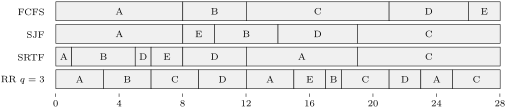
The timelines of . Shortest job first moves E, the shortest, before B, D and C; shortest remaining time first also interrupts A, at 1, and D, at 6. Round robin gives every job the processor within 9 units of its arrival, at the price of finishing A, B and C later than first come first served does.
The timelines of Output 10.4. Shortest job first moves E, the shortest, before B, D and C; shortest remaining time first also interrupts A, at 1, and D, at 6. Round robin gives every job the processor within 9 units of its arrival, at the price of finishing A, B and C later than first come first served does.
अध्याय में पढ़ें →