全部书籍

专业

应用 关于 Coach 登录 开始阅读

书籍暂未推出简体中文版——当前显示英文版。

Economics · 术语表

什么是 Value added?

Definition 17.3 Middle School Economics · 第 17 章 — Measuring an Economy: GDP

The value added of a firm in a period is the value of what it sells, minus the value of the intermediate goods it bought:

value added=sales−intermediate goods.\text{value added} = \text{sales} - \text{intermediate goods}.
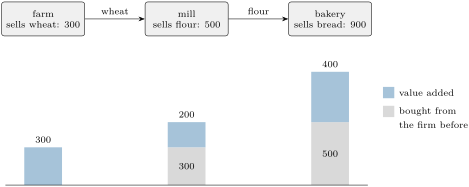
A chain of three firms, in dalens. Each bar is a firm’s sales; the grey part is what it bought from the firm before, the blue part its value added. The value added, 300 + 200 + 400 = 900, equals the price of the bread.
A chain of three firms, in dalens. Each bar is a firm’s sales; the grey part is what it bought from the firm before, the blue part its value added. The value added, 300+200+400=900300 + 200 + 400 = 900, equals the price of the bread.
A mill, a bakery and a shop in one street. Each adds value to what it buys from the one before.
在原文中阅读 →
