جميع الكتب

مهني

1 Markets I: The Ecosystem and Exchange-Traded Marketsالأسواق عبر الإنترنت 2 Markets II: Rates, FX and Creditالأسواق عبر الإنترنت 3 Markets III: Commodities, Energy and Cryptoالأسواق عبر الإنترنت 4 Quantitative Methodsالأساليب عبر الإنترنت 5 Derivatives and Volatilityالمشتقات عبر الإنترنت 6 Rates, Credit, XVA and Riskالفائدة والائتمان والمخاطر عبر الإنترنت 7 Research Craft: Predictors, Backtests, Measurement, Portfoliosالبحث عبر الإنترنت 8 Strategies I: Equities and Futuresالاستراتيجيات عبر الإنترنت 9 Strategies II: Volatility, Relative Value, Macro and the Bank Desksالاستراتيجيات عبر الإنترنت 10 Microstructure and Executionالتنفيذ عبر الإنترنت 11 Market Making and High-Frequency Tradingصناعة السوق عبر الإنترنت 12 Machine Learning for Marketsتعلم الآلة عبر الإنترنت 13 Low-Latency Softwareالتكنولوجيا عبر الإنترنت 14 Networks, Hardware and Trading Infrastructureالتكنولوجيا عبر الإنترنت 15 Research, Data and Risk Platformsالتكنولوجيا عبر الإنترنت 16 The Desk and the Firmالشركة عبر الإنترنت 17 The Industry: Firms, Roles and Careersالمسارات المهنية عبر الإنترنت 18 The Interview Bookالمسارات المهنية عبر الإنترنت
التطبيقات حول المدرب تسجيل الدخول ابدأ القراءة

Quantitative Finance · المسرد

ما معنى Backward induction؟

Definition 12.4 The Interview Book · الفصل 12 — Brainteasers and Logic

Backward induction solves a finite sequential game or decision problem by determining the best action at the last stage, then at the one before given the best continuation, and so on to the first stage.
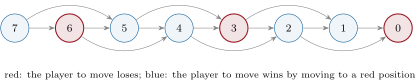
The take-away game with moves of one or two tokens, last to take wins, solved by backward induction from 0. Arrows are moves (straight: take one; curved: take two). Positions 0, 3 and 6 are losing for the player to move. Exhaustive search in iv_teasers.py.
Figure 12.1. The take-away game with moves of one or two tokens, last to take wins, solved by backward induction from 0. Arrows are moves (straight: take one; curved: take two). Positions 0, 3 and 6 are losing for the player to move. Exhaustive search in iv_teasers.py.
اقرأ في الفصل →
