
Tous les livres

Professionnel

Applis À propos Coach Connexion Commencer la lecture

Quantitative Finance · Glossaire

Qu'est-ce que « Bank run » ?

Definition 24.12 Rates, Credit, XVA and Risk · Chapitre 24 — Liquidity and Funding Risk; Bank Treasury

A bank run is a withdrawal of deposits faster than the bank can meet from its liquid assets, driven by depositors’ fear that others will withdraw first: individually rational, collectively self-fulfilling.
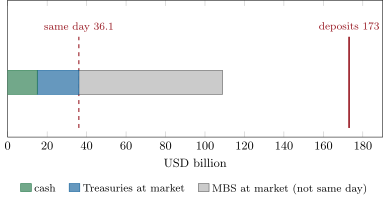
The stylised bank’s liquid resources a year after the rise, at market values, against its deposits. Only cash and Treasuries can be turned into payments on the day of a run: 20.9% of deposits. Data: the chapter’s tutorial.
Figure 24.4. The stylised bank’s liquid resources a year after the rise, at market values, against its deposits. Only cash and Treasuries can be turned into payments on the day of a run: 20.9% of deposits. Data: the chapter’s tutorial.

Exemples

Example 24.13 (The stylised bank a year later)

After the 350 basis point rise, the MBS book held to maturity has lost 19.2% of its value, USD 17.2 billion, 108% of the bank’s equity; the Treasuries have lost 3.9. On the day, the bank can pay out its cash and sell its Treasuries at market: 36.1, 20.9% of its deposits (Figure 24.4). Anything more requires pledging or selling the MBS, which realises the loss.

Lire dans le chapitre →