
جميع الكتب

مهني

1 Markets I: The Ecosystem and Exchange-Traded Marketsالأسواق عبر الإنترنت 2 Markets II: Rates, FX and Creditالأسواق عبر الإنترنت 3 Markets III: Commodities, Energy and Cryptoالأسواق عبر الإنترنت 4 Quantitative Methodsالأساليب عبر الإنترنت 5 Derivatives and Volatilityالمشتقات عبر الإنترنت 6 Rates, Credit, XVA and Riskالفائدة والائتمان والمخاطر عبر الإنترنت 7 Research Craft: Predictors, Backtests, Measurement, Portfoliosالبحث عبر الإنترنت 8 Strategies I: Equities and Futuresالاستراتيجيات عبر الإنترنت 9 Strategies II: Volatility, Relative Value, Macro and the Bank Desksالاستراتيجيات عبر الإنترنت 10 Microstructure and Executionالتنفيذ عبر الإنترنت 11 Market Making and High-Frequency Tradingصناعة السوق عبر الإنترنت 12 Machine Learning for Marketsتعلم الآلة عبر الإنترنت 13 Low-Latency Softwareالتكنولوجيا عبر الإنترنت 14 Networks, Hardware and Trading Infrastructureالتكنولوجيا عبر الإنترنت 15 Research, Data and Risk Platformsالتكنولوجيا عبر الإنترنت 16 The Desk and the Firmالشركة عبر الإنترنت 17 The Industry: Firms, Roles and Careersالمسارات المهنية عبر الإنترنت 18 The Interview Bookالمسارات المهنية عبر الإنترنت
التطبيقات حول المدرب تسجيل الدخول ابدأ القراءة

Quantitative Finance · المسرد

ما معنى Binary log, deferred formatting؟

يُعرف أيضًا باسم: binary log · deferred formatting

Definition 23.1 Low-Latency Software · الفصل 23 — Logging, Capture and Replay

A binary log is a log whose records hold a statement identifier, a timestamp and the raw values of the statement’s arguments, not text; the statements’ format strings are stored once, in the log’s header or alongside the binary. Deferred formatting is the practice of turning such records into text only when the log is read, by a separate program, so that the program that writes the log never converts a number to text.

Logging, capture and replay. The hot path writes raw records into a ring and returns; a writer thread drains them to a file whose header holds every statement’s format; formatting happens offline. The inputs are journaled as they arrive, and a replay of the journal through the same binary produces the same log.
Figure 23.1. Logging, capture and replay. The hot path writes raw records into a ring and returns; a writer thread drains them to a file whose header holds every statement’s format; formatting happens offline. The inputs are journaled as they arrive, and a replay of the journal through the same binary produces the same log.
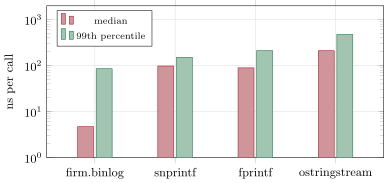
The cost of one log call carrying four numbers, by method (TSC-timed, 200 000 calls each): the binary log with its writer thread draining the ring on another core, snprintf into a buffer, fprintf into a fully buffered file, and a string stream. Measured on a laptop (Intel Core Ultra 7 155H) under WSL2. Data: bench_log.py.
Figure 23.2. The cost of one log call carrying four numbers, by method (TSC-timed, 200 000 calls each): the binary log with its writer thread draining the ring on another core, snprintf into a buffer, fprintf into a fully buffered file, and a string stream. Measured on a laptop (Intel Core Ultra 7 155H) under WSL2. Data: bench_log.py.
اقرأ في الفصل →