
सभी किताबें

पेशेवर

1 Markets I: The Ecosystem and Exchange-Traded Marketsबाज़ार ऑनलाइन 2 Markets II: Rates, FX and Creditबाज़ार ऑनलाइन 3 Markets III: Commodities, Energy and Cryptoबाज़ार ऑनलाइन 4 Quantitative Methodsविधियाँ ऑनलाइन 5 Derivatives and Volatilityडेरिवेटिव्स ऑनलाइन 6 Rates, Credit, XVA and Riskब्याज दरें, क्रेडिट और जोखिम ऑनलाइन 7 Research Craft: Predictors, Backtests, Measurement, Portfoliosअनुसंधान ऑनलाइन 8 Strategies I: Equities and Futuresरणनीतियाँ ऑनलाइन 9 Strategies II: Volatility, Relative Value, Macro and the Bank Desksरणनीतियाँ ऑनलाइन 10 Microstructure and Executionनिष्पादन ऑनलाइन 11 Market Making and High-Frequency Tradingमार्केट मेकिंग ऑनलाइन 12 Machine Learning for Marketsमशीन लर्निंग ऑनलाइन 13 Low-Latency Softwareतकनीक ऑनलाइन 14 Networks, Hardware and Trading Infrastructureतकनीक ऑनलाइन 15 Research, Data and Risk Platformsतकनीक ऑनलाइन 16 The Desk and the Firmफ़र्म ऑनलाइन 17 The Industry: Firms, Roles and Careersकरियर ऑनलाइन 18 Interviews I: Maths, Probability and Speedकरियर ऑनलाइन 19 Interviews II: Markets, Trading Games and the Final Roundकरियर ऑनलाइन 20 Interviews III: Codeकरियर ऑनलाइन
ऐप्स परिचय Coach लॉग इन पढ़ना शुरू करें

Quantitative Finance · शब्दावली

Counterparty master क्या है?

Definition 6.8 Research, Data and Risk Platforms · अध्याय 6 — Reference Data and Symbology Services

A counterparty master is the reference-data record of the legal entities the firm deals with: for each, its legal entity identifier (One Quant Book 2, chapter 28), names, parent entity, jurisdiction and the agreements and accounts attached to it, effective-dated and bitemporal like instrument data.
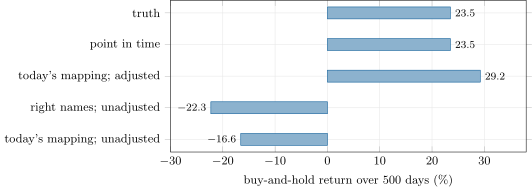
The return of the same 20-ticker basket computed five ways: the truth, point in time (equal to it), today’s mapping with split-adjusted prices, the right listings with unadjusted prices, and today’s mapping with unadjusted prices. Data: pl_refdata.basket_backtest.
Figure 6.4. The return of the same 20-ticker basket computed five ways: the truth, point in time (equal to it), today’s mapping with split-adjusted prices, the right listings with unadjusted prices, and today’s mapping with unadjusted prices. Data: pl_refdata.basket_backtest.

उदाहरण

Example 6.9 (The basket that was not held)

A research note chooses 20 tickers on day 0 (five of which will be renamed and later reused, six of which will split) and asks for the basket’s buy-and-hold return over the 500 days. Point in time, with split factors, the answer is the truth: +23.5%+23.5\%. With today’s ticker mapping and unadjusted prices it is −16.6%-16.6\%, an error of 40.1 points: unadjusted splits alone cost 45.8 points (the right listings, unadjusted, return −22.3%-22.3\%), and today’s mapping alone adds 5.7 (split-adjusted, it returns +29.2%+29.2\%, the reusers’ returns in place of the intended listings’).

अध्याय में पढ़ें →