
جميع الكتب

مهني

1 Markets I: The Ecosystem and Exchange-Traded Marketsالأسواق عبر الإنترنت 2 Markets II: Rates, FX and Creditالأسواق عبر الإنترنت 3 Markets III: Commodities, Energy and Cryptoالأسواق عبر الإنترنت 4 Quantitative Methodsالأساليب عبر الإنترنت 5 Derivatives and Volatilityالمشتقات عبر الإنترنت 6 Rates, Credit, XVA and Riskالفائدة والائتمان والمخاطر عبر الإنترنت 7 Research Craft: Predictors, Backtests, Measurement, Portfoliosالبحث عبر الإنترنت 8 Strategies I: Equities and Futuresالاستراتيجيات عبر الإنترنت 9 Strategies II: Volatility, Relative Value, Macro and the Bank Desksالاستراتيجيات عبر الإنترنت 10 Microstructure and Executionالتنفيذ عبر الإنترنت 11 Market Making and High-Frequency Tradingصناعة السوق عبر الإنترنت 12 Machine Learning for Marketsتعلم الآلة عبر الإنترنت 13 Low-Latency Softwareالتكنولوجيا عبر الإنترنت 14 Networks, Hardware and Trading Infrastructureالتكنولوجيا عبر الإنترنت 15 Research, Data and Risk Platformsالتكنولوجيا عبر الإنترنت 16 The Desk and the Firmالشركة عبر الإنترنت 17 The Industry: Firms, Roles and Careersالمسارات المهنية عبر الإنترنت 18 The Interview Bookالمسارات المهنية عبر الإنترنت
التطبيقات حول المدرب تسجيل الدخول ابدأ القراءة

Quantitative Finance · المسرد

ما معنى Current coupon, primary–secondary spread؟

يُعرف أيضًا باسم: current coupon · primary--secondary spread

Definition 12.4 Rates, Credit, XVA and Risk · الفصل 12 — Mortgage Modelling

The current coupon is the yield of a to-be-announced mortgage security priced at par, interpolated between the coupons that trade. The primary–secondary spread is the mortgage rate offered to borrowers (the primary market) minus the current coupon (the secondary market): the lenders’ and guarantors’ margin, which widens when origination capacity is scarce (in 2020 it ran 73 to 81 basis points above what demand explained, from March to September). A prepayment model maps the rate paths to borrowers’ mortgage rates through both; the chapter uses the ten-year par swap rate plus a fixed 175 basis points.
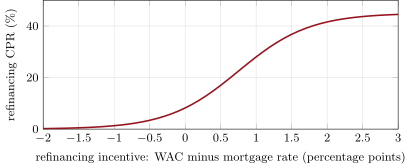
The refinancing S-curve of the chapter’s prepayment model, before burnout: annual refinancing speed against the incentive. Turnover adds a few per cent at every incentive. Illustrative parameters; the chapter’s tutorial.
Figure 12.1. The refinancing S-curve of the chapter’s prepayment model, before burnout: annual refinancing speed against the incentive. Turnover adds a few per cent at every incentive. Illustrative parameters; the chapter’s tutorial.
اقرأ في الفصل →