
جميع الكتب

مهني

1 Markets I: The Ecosystem and Exchange-Traded Marketsالأسواق عبر الإنترنت 2 Markets II: Rates, FX and Creditالأسواق عبر الإنترنت 3 Markets III: Commodities, Energy and Cryptoالأسواق عبر الإنترنت 4 Quantitative Methodsالأساليب عبر الإنترنت 5 Derivatives and Volatilityالمشتقات عبر الإنترنت 6 Rates, Credit, XVA and Riskالفائدة والائتمان والمخاطر عبر الإنترنت 7 Research Craft: Predictors, Backtests, Measurement, Portfoliosالبحث عبر الإنترنت 8 Strategies I: Equities and Futuresالاستراتيجيات عبر الإنترنت 9 Strategies II: Volatility, Relative Value, Macro and the Bank Desksالاستراتيجيات عبر الإنترنت 10 Microstructure and Executionالتنفيذ عبر الإنترنت 11 Market Making and High-Frequency Tradingصناعة السوق عبر الإنترنت 12 Machine Learning for Marketsتعلم الآلة عبر الإنترنت 13 Low-Latency Softwareالتكنولوجيا عبر الإنترنت 14 Networks, Hardware and Trading Infrastructureالتكنولوجيا عبر الإنترنت 15 Research, Data and Risk Platformsالتكنولوجيا عبر الإنترنت 16 The Desk and the Firmالشركة عبر الإنترنت 17 The Industry: Firms, Roles and Careersالمسارات المهنية عبر الإنترنت 18 The Interview Bookالمسارات المهنية عبر الإنترنت
التطبيقات حول المدرب تسجيل الدخول ابدأ القراءة

Quantitative Finance · المسرد

ما معنى Flash crash and stub quote؟

يُعرف أيضًا باسم: flash crash · stub quote

Definition 31.1 Markets I: The Ecosystem and Exchange-Traded Markets · الفصل 31 — Stress Case Studies

A flash crash is a fall and recovery of prices, of a size normally seen over days, within minutes, without corresponding news. A stub quote is a quote at a price far from the market (a bid of a cent, an offer of $100 000), entered by or for a market maker to satisfy an obligation to quote continuously while not intending to trade.
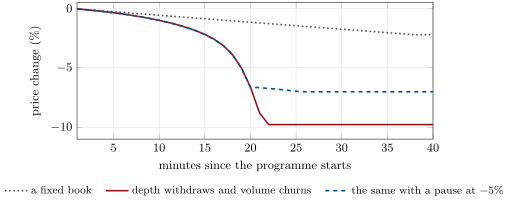
A toy model of the mechanism, calibrated to nothing: a programme sells 9% of the last minute’s volume; depth shrinks, and intermediaries’ churn raises volume, when the price is below its recent average. With a fixed book the same 75 000 contracts cost 2.2%; with the two feedbacks 9.8%, of which 5.9 points in the last four minutes; a pause that lets buyers re-anchor stops the fall at 7.0%. The model has no recovery. Data: the tutorial’s simulation.
Figure 31.1. A toy model of the mechanism, calibrated to nothing: a programme sells 9% of the last minute’s volume; depth shrinks, and intermediaries’ churn raises volume, when the price is below its recent average. With a fixed book the same 75 000 contracts cost 2.2%; with the two feedbacks 9.8%, of which 5.9 points in the last four minutes; a pause that lets buyers re-anchor stops the fall at 7.0%. The model has no recovery. Data: the tutorial’s simulation.
اقرأ في الفصل →