 Coach
CoachIncremental revaluation recomputes only the results whose inputs changed: each result is stored with the version of the trade and of the market data it was computed from, and a rerun reprices only the trades whose key is not in the store.
Examples
Example 20.4 (06:51 against 06:00)
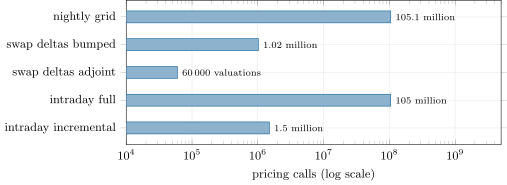
Planned by trade batches across all scenarios and trusting its estimates, the grid finishes at 06:51 on 32 cores and at 06:25 on 64: more cores shorten the queue, not the one long task. Cutting the scenarios into batches of 100 brings the naive plan to 05:41; isolating the slow trade by its measured cost brings every granularity from 20 to 1 000 scenarios inside the window, the best at 05:34 (250 scenarios a task). Quarantining the failing trade instead of failing its tasks keeps more than a third of the book’s results. The pricing calls saved elsewhere are larger still: the adjoint replaces 1.02 million bumped repricings of swaps by 60 000 recorded valuations, and an incremental intraday rerun makes 1.5 million calls where a full one makes 105 million.