جميع الكتب

مهني

1 Markets I: The Ecosystem and Exchange-Traded Marketsالأسواق عبر الإنترنت 2 Markets II: Rates, FX and Creditالأسواق عبر الإنترنت 3 Markets III: Commodities, Energy and Cryptoالأسواق عبر الإنترنت 4 Quantitative Methodsالأساليب عبر الإنترنت 5 Derivatives and Volatilityالمشتقات عبر الإنترنت 6 Rates, Credit, XVA and Riskالفائدة والائتمان والمخاطر عبر الإنترنت 7 Research Craft: Predictors, Backtests, Measurement, Portfoliosالبحث عبر الإنترنت 8 Strategies I: Equities and Futuresالاستراتيجيات عبر الإنترنت 9 Strategies II: Volatility, Relative Value, Macro and the Bank Desksالاستراتيجيات عبر الإنترنت 10 Microstructure and Executionالتنفيذ عبر الإنترنت 11 Market Making and High-Frequency Tradingصناعة السوق عبر الإنترنت 12 Machine Learning for Marketsتعلم الآلة عبر الإنترنت 13 Low-Latency Softwareالتكنولوجيا عبر الإنترنت 14 Networks, Hardware and Trading Infrastructureالتكنولوجيا عبر الإنترنت 15 Research, Data and Risk Platformsالتكنولوجيا عبر الإنترنت 16 The Desk and the Firmالشركة عبر الإنترنت 17 The Industry: Firms, Roles and Careersالمسارات المهنية عبر الإنترنت 18 The Interview Bookالمسارات المهنية عبر الإنترنت
التطبيقات حول المدرب تسجيل الدخول ابدأ القراءة

Quantitative Finance · المسرد

ما معنى Kill switch؟

Definition 27.5 Market Making and High-Frequency Trading · الفصل 27 — Risk Controls

A kill switch is a control that, when triggered by a person or by a monitor, stops a strategy, desk or the whole firm from trading at once: it cancels its open orders, refuses new ones and, if so configured, flattens its positions, and it records who pulled it and why.
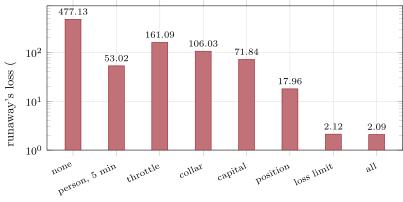
The loss of a runaway shaped on the 2012 incident under each control alone and under all of them together (log scale, $ million): no control (stopped by hand at 45 minutes), a person at 5 minutes, an order-rate throttle of 500 a second, a 5% price collar, a $1 billion capital threshold, a $250 million position limit and a $2 million loss limit marked each second. Data: hf_risk.table.
Figure 27.2. The loss of a runaway shaped on the 2012 incident under each control alone and under all of them together (log scale, $ million): no control (stopped by hand at 45 minutes), a person at 5 minutes, an order-rate throttle of 500 a second, a 5% price collar, a $1 billion capital threshold, a $250 million position limit and a $2 million loss limit marked each second. Data: hf_risk.table.
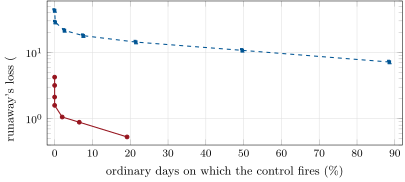
The trade-off of a threshold: the runaway’s loss under a loss limit ($0.5 to $4 million) and under a gross position limit ($100 to $600 million) against the share of 2 500 ordinary days on which each would have fired. Data: hf_risk.sweep.
Figure 27.3. The trade-off of a threshold: the runaway’s loss under a loss limit ($0.5 to $4 million) and under a gross position limit ($100 to $600 million) against the share of 2 500 ordinary days on which each would have fired. Data: hf_risk.sweep.
اقرأ في الفصل →