جميع الكتب

مهني

1 Markets I: The Ecosystem and Exchange-Traded Marketsالأسواق عبر الإنترنت 2 Markets II: Rates, FX and Creditالأسواق عبر الإنترنت 3 Markets III: Commodities, Energy and Cryptoالأسواق عبر الإنترنت 4 Quantitative Methodsالأساليب عبر الإنترنت 5 Derivatives and Volatilityالمشتقات عبر الإنترنت 6 Rates, Credit, XVA and Riskالفائدة والائتمان والمخاطر عبر الإنترنت 7 Research Craft: Predictors, Backtests, Measurement, Portfoliosالبحث عبر الإنترنت 8 Strategies I: Equities and Futuresالاستراتيجيات عبر الإنترنت 9 Strategies II: Volatility, Relative Value, Macro and the Bank Desksالاستراتيجيات عبر الإنترنت 10 Microstructure and Executionالتنفيذ عبر الإنترنت 11 Market Making and High-Frequency Tradingصناعة السوق عبر الإنترنت 12 Machine Learning for Marketsتعلم الآلة عبر الإنترنت 13 Low-Latency Softwareالتكنولوجيا عبر الإنترنت 14 Networks, Hardware and Trading Infrastructureالتكنولوجيا عبر الإنترنت 15 Research, Data and Risk Platformsالتكنولوجيا عبر الإنترنت 16 The Desk and the Firmالشركة عبر الإنترنت 17 The Industry: Firms, Roles and Careersالمسارات المهنية عبر الإنترنت 18 The Interview Bookالمسارات المهنية عبر الإنترنت
التطبيقات حول المدرب تسجيل الدخول ابدأ القراءة

Quantitative Finance · المسرد

ما معنى Mean-reversion speed filter؟

Definition 3.3 Strategies I: Equities and Futures · الفصل 3 — Residual and Principal-Component Stat Arb

A mean-reversion speed filter trades a stock’s s-score only when its fitted mean-reversion speed is high enough that the reversion is expected well within the estimation window; Avellaneda and Lee required κ>252/30=8.4\kappa > 252/30 = 8.4, a mean-reversion time under half the sixty-day window (0<b<0.96720 < b < 0.9672).

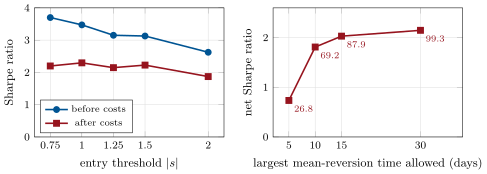
The sector-index s-score book with a planted mean-reverting share of 0.3. Left: Sharpe ratio against the entry threshold. Right: net Sharpe ratio against the speed filter’s largest allowed mean-reversion time (30 days is Avellaneda and Lee’s); labels give the percentage of fits kept. Data: s1_residarb.run.
Figure 3.1. The sector-index s-score book with a planted mean-reverting share of 0.3. Left: Sharpe ratio against the entry threshold. Right: net Sharpe ratio against the speed filter’s largest allowed mean-reversion time (30 days is Avellaneda and Lee’s); labels give the percentage of fits kept. Data: s1_residarb.run.
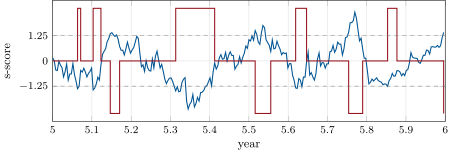
One synthetic stock’s s-score (against its sector index, not centred) over a year, with the entry thresholds dashed; the step line is the position (up long, down short, drawn at ± 2.6). Data: s1_residarb.path.
Figure 3.2. One synthetic stock’s s-score (against its sector index, not centred) over a year, with the entry thresholds dashed; the step line is the position (up long, down short, drawn at ±2.6\pm 2.6). Data: s1_residarb.path.
اقرأ في الفصل →