 Coach
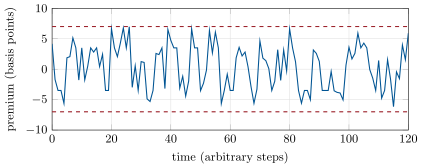
CoachThe net asset value (NAV) of a fund share is the value of the fund’s holdings less its liabilities, divided by the number of shares, computed once a day at official closing prices. The indicative NAV is an estimate of the same quantity recomputed during the day from current prices of the basket. The premium of an ETF is , with its market price; a negative premium is a discount.
Ejemplos
Example 14.8 (March 2020)
During the sell-off of March 2020, investment-grade corporate bond ETFs closed about 365 basis points below their NAVs, on an asset-weighted basis, on 12 March and again on 19 March; the largest of them went from a discount of 2.8% on 20 March to a premium of 2.9% on 23 March, the day a central-bank purchase programme was announced. A central-bank study of the episode read the discounts as the ETFs’ prices leading stale bond valuations, in a market where dealers had stopped making prices: the ETF was the price, and the NAV the estimate.