
جميع الكتب

مهني

1 Markets I: The Ecosystem and Exchange-Traded Marketsالأسواق عبر الإنترنت 2 Markets II: Rates, FX and Creditالأسواق عبر الإنترنت 3 Markets III: Commodities, Energy and Cryptoالأسواق عبر الإنترنت 4 Quantitative Methodsالأساليب عبر الإنترنت 5 Derivatives and Volatilityالمشتقات عبر الإنترنت 6 Rates, Credit, XVA and Riskالفائدة والائتمان والمخاطر عبر الإنترنت 7 Research Craft: Predictors, Backtests, Measurement, Portfoliosالبحث عبر الإنترنت 8 Strategies I: Equities and Futuresالاستراتيجيات عبر الإنترنت 9 Strategies II: Volatility, Relative Value, Macro and the Bank Desksالاستراتيجيات عبر الإنترنت 10 Microstructure and Executionالتنفيذ عبر الإنترنت 11 Market Making and High-Frequency Tradingصناعة السوق عبر الإنترنت 12 Machine Learning for Marketsتعلم الآلة عبر الإنترنت 13 Low-Latency Softwareالتكنولوجيا عبر الإنترنت 14 Networks, Hardware and Trading Infrastructureالتكنولوجيا عبر الإنترنت 15 Research, Data and Risk Platformsالتكنولوجيا عبر الإنترنت 16 The Desk and the Firmالشركة عبر الإنترنت 17 The Industry: Firms, Roles and Careersالمسارات المهنية عبر الإنترنت 18 The Interview Bookالمسارات المهنية عبر الإنترنت
التطبيقات حول المدرب تسجيل الدخول ابدأ القراءة

Quantitative Finance · المسرد

ما معنى Page fault, pre-faulting؟

يُعرف أيضًا باسم: page fault · pre-faulting

Definition 6.3 Low-Latency Software · الفصل 6 — C++ for Latency I: Memory

A page fault is the processor’s trap into the kernel when a program touches a virtual page that is not yet backed by physical memory (a minor fault: the kernel allocates and zeroes a page) or whose contents are on disk (a major fault). Pre-faulting is touching every page of a buffer at start-up, so that no fault happens later on the hot path.
Left: destroying and creating one of 10 000 live 64-byte orders at random with the C++ heap, the build’s pool and the standard library’s pool resource (400 000 replacements). Right: the first write to each 4 KiB page of a fresh 64 MiB mapping, and to the same pages once written. Measured on a laptop (Intel Core Ultra 7 155H) under WSL2, no isolated cores, pinned to one CPU. Data: bench_alloc.py.
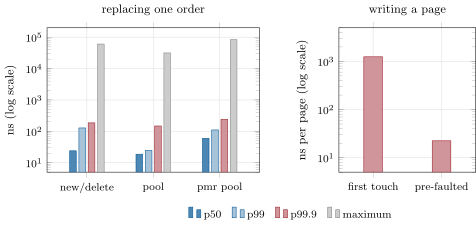
Figure 6.2. Left: destroying and creating one of 10 000 live 64-byte orders at random with the C++ heap, the build’s pool and the standard library’s pool resource (400 000 replacements). Right: the first write to each 4 KiB page of a fresh 64 MiB mapping, and to the same pages once written. Measured on a laptop (Intel Core Ultra 7 155H) under WSL2, no isolated cores, pinned to one CPU. Data: bench_alloc.py.
اقرأ في الفصل →