 Coach
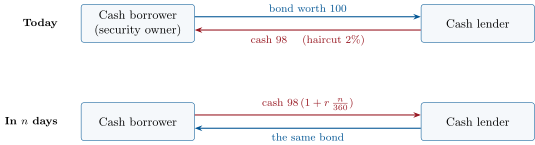
CoachIn a repurchase agreement (repo) one party sells a security for cash and agrees at the same time to buy it back at a fixed later date at a fixed higher price. Economically it is a cash loan secured by the security; the price difference is the interest, quoted as the repo rate. The haircut is the fraction by which the cash lent falls short of the security’s market value: a security worth 100 raises .
Ejemplos
Example 6.6 (Two percent to four percent)
Government bonds financed at a 2% haircut allow : this is how relative-value funds earn a living from price differences of a few basis points (One Quant Book 9). If lenders move the haircut to 4%, a fund at the limit must sell half its assets although no price has moved. Haircuts are set by lenders, rise when volatility rises, and are the channel through which a funding problem becomes a market problem.