
جميع الكتب

مهني

1 Markets I: The Ecosystem and Exchange-Traded Marketsالأسواق عبر الإنترنت 2 Markets II: Rates, FX and Creditالأسواق عبر الإنترنت 3 Markets III: Commodities, Energy and Cryptoالأسواق عبر الإنترنت 4 Quantitative Methodsالأساليب عبر الإنترنت 5 Derivatives and Volatilityالمشتقات عبر الإنترنت 6 Rates, Credit, XVA and Riskالفائدة والائتمان والمخاطر عبر الإنترنت 7 Research Craft: Predictors, Backtests, Measurement, Portfoliosالبحث عبر الإنترنت 8 Strategies I: Equities and Futuresالاستراتيجيات عبر الإنترنت 9 Strategies II: Volatility, Relative Value, Macro and the Bank Desksالاستراتيجيات عبر الإنترنت 10 Microstructure and Executionالتنفيذ عبر الإنترنت 11 Market Making and High-Frequency Tradingصناعة السوق عبر الإنترنت 12 Machine Learning for Marketsتعلم الآلة عبر الإنترنت 13 Low-Latency Softwareالتكنولوجيا عبر الإنترنت 14 Networks, Hardware and Trading Infrastructureالتكنولوجيا عبر الإنترنت 15 Research, Data and Risk Platformsالتكنولوجيا عبر الإنترنت 16 The Desk and the Firmالشركة عبر الإنترنت 17 The Industry: Firms, Roles and Careersالمسارات المهنية عبر الإنترنت 18 The Interview Bookالمسارات المهنية عبر الإنترنت
التطبيقات حول المدرب تسجيل الدخول ابدأ القراءة

Quantitative Finance · المسرد

ما معنى Restatement, data vintage, backfill bias؟

يُعرف أيضًا باسم: restatement · data vintage · backfill bias

Definition 3.5 Research Craft: Predictors, Backtests, Measurement, Portfolios · الفصل 3 — Point-in-Time Data and the Biases

A restatement is a later published change to a value already released: a company restating an earlier quarter’s accounts, a statistical agency revising a figure. A data vintage is the whole history of a series as it was published at one knowledge time. Backfill bias arises when history is added to a database after the fact, typically when a fund or a vendor’s new coverage enters with its past returns: the entrants chose to enter because their past was good, and the backfilled history was never available in real time.
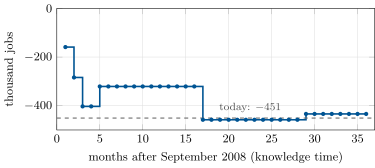
The US payroll change for September 2008 in each of the 36 monthly vintages after it: -159, -284, -403, then the benchmark revisions of February 2009 (-321), February 2010 (-458) and February 2011 (-434); -451 in today’s vintage (dashed). Data: Federal Reserve Bank of Philadelphia, Real-Time Data Set for Macroeconomists (BLS data).
Figure 3.3. The US payroll change for September 2008 in each of the 36 monthly vintages after it: −159-159, −284-284, −403-403, then the benchmark revisions of February 2009 (−321-321), February 2010 (−458-458) and February 2011 (−434-434); −451-451 in today’s vintage (dashed). Data: Federal Reserve Bank of Philadelphia, Real-Time Data Set for Macroeconomists (BLS data).
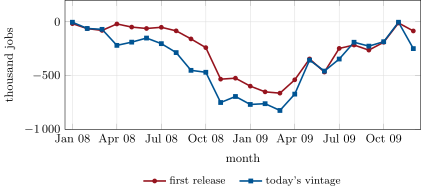
Monthly US payroll changes in 2008–2009 as first published and as known today. The first releases understated the losses of 2008 by 1.7 million jobs in total. Data: Federal Reserve Bank of Philadelphia, Real-Time Data Set for Macroeconomists (BLS data).
Figure 3.4. Monthly US payroll changes in 2008–2009 as first published and as known today. The first releases understated the losses of 2008 by 1.7 million jobs in total. Data: Federal Reserve Bank of Philadelphia, Real-Time Data Set for Macroeconomists (BLS data).
اقرأ في الفصل →