
جميع الكتب

مهني

1 Markets I: The Ecosystem and Exchange-Traded Marketsالأسواق عبر الإنترنت 2 Markets II: Rates, FX and Creditالأسواق عبر الإنترنت 3 Markets III: Commodities, Energy and Cryptoالأسواق عبر الإنترنت 4 Quantitative Methodsالأساليب عبر الإنترنت 5 Derivatives and Volatilityالمشتقات عبر الإنترنت 6 Rates, Credit, XVA and Riskالفائدة والائتمان والمخاطر عبر الإنترنت 7 Research Craft: Predictors, Backtests, Measurement, Portfoliosالبحث عبر الإنترنت 8 Strategies I: Equities and Futuresالاستراتيجيات عبر الإنترنت 9 Strategies II: Volatility, Relative Value, Macro and the Bank Desksالاستراتيجيات عبر الإنترنت 10 Microstructure and Executionالتنفيذ عبر الإنترنت 11 Market Making and High-Frequency Tradingصناعة السوق عبر الإنترنت 12 Machine Learning for Marketsتعلم الآلة عبر الإنترنت 13 Low-Latency Softwareالتكنولوجيا عبر الإنترنت 14 Networks, Hardware and Trading Infrastructureالتكنولوجيا عبر الإنترنت 15 Research, Data and Risk Platformsالتكنولوجيا عبر الإنترنت 16 The Desk and the Firmالشركة عبر الإنترنت 17 The Industry: Firms, Roles and Careersالمسارات المهنية عبر الإنترنت 18 The Interview Bookالمسارات المهنية عبر الإنترنت
التطبيقات حول المدرب تسجيل الدخول ابدأ القراءة

Quantitative Finance · المسرد

ما معنى Stale-book flag, recovery latency؟

يُعرف أيضًا باسم: stale-book flag · recovery latency

Definition 18.2 Low-Latency Software · الفصل 18 — The Feed Handler

The stale-book flag is the handler’s public statement that the book built from its events may differ from the venue’s, raised when a gap is detected and lowered when it is closed. The recovery latency of a gap is the time from its detection to the moment the book is correct again: the other line’s delay, a retransmission round trip, or the wait for and the loading of a snapshot.
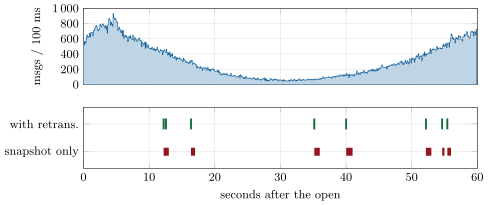
A simulated minute from the open. Top: messages published per 100 ms, sixteen times busier at the open than at midday. Bottom: the gaps that the other line could not fill, with the retransmission server (each closed within 3\, m s: a tick) and with snapshot recovery only (a snapshot a second: a bar from detection to recovery); the 4 224 gaps filled by the other line are too short to draw. Data: fig_stale.py (deterministic: the simulator and the handler are).
Figure 18.2. A simulated minute from the open. Top: messages published per 100 ms, sixteen times busier at the open than at midday. Bottom: the gaps that the other line could not fill, with the retransmission server (each closed within 3 ms3\,\mathrm{m}\mathrm{s}: a tick) and with snapshot recovery only (a snapshot a second: a bar from detection to recovery); the 4 224 gaps filled by the other line are too short to draw. Data: fig_stale.py (deterministic: the simulator and the handler are).
اقرأ في الفصل →