جميع الكتب

مهني

1 Markets I: The Ecosystem and Exchange-Traded Marketsالأسواق عبر الإنترنت 2 Markets II: Rates, FX and Creditالأسواق عبر الإنترنت 3 Markets III: Commodities, Energy and Cryptoالأسواق عبر الإنترنت 4 Quantitative Methodsالأساليب عبر الإنترنت 5 Derivatives and Volatilityالمشتقات عبر الإنترنت 6 Rates, Credit, XVA and Riskالفائدة والائتمان والمخاطر عبر الإنترنت 7 Research Craft: Predictors, Backtests, Measurement, Portfoliosالبحث عبر الإنترنت 8 Strategies I: Equities and Futuresالاستراتيجيات عبر الإنترنت 9 Strategies II: Volatility, Relative Value, Macro and the Bank Desksالاستراتيجيات عبر الإنترنت 10 Microstructure and Executionالتنفيذ عبر الإنترنت 11 Market Making and High-Frequency Tradingصناعة السوق عبر الإنترنت 12 Machine Learning for Marketsتعلم الآلة عبر الإنترنت 13 Low-Latency Softwareالتكنولوجيا عبر الإنترنت 14 Networks, Hardware and Trading Infrastructureالتكنولوجيا عبر الإنترنت 15 Research, Data and Risk Platformsالتكنولوجيا عبر الإنترنت 16 The Desk and the Firmالشركة عبر الإنترنت 17 The Industry: Firms, Roles and Careersالمسارات المهنية عبر الإنترنت 18 The Interview Bookالمسارات المهنية عبر الإنترنت
التطبيقات حول المدرب تسجيل الدخول ابدأ القراءة

Quantitative Finance · المسرد

ما معنى Zero-copy transfer؟

Definition 9.6 Research, Data and Risk Platforms · الفصل 9 — Native Extensions

A zero-copy transfer of data across a boundary hands the receiver a reference to the sender’s memory (a pointer and a layout) instead of a copy, so that its cost does not depend on the size of the data; it requires the two sides to agree on the layout and on who may write and free the memory, and for how long.
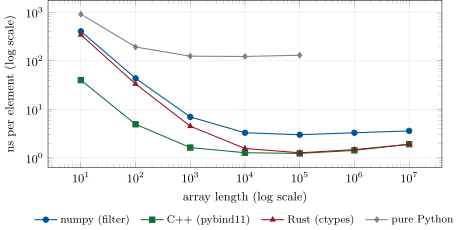
Time per element of the whole-array average against the array’s length. For short arrays every route is dominated by its fixed cost per call (c_0/n); for long arrays the native loops settle at about 1.3 to 1.9 ns an element and numpy’s filter at 3 to 3.6, while pure Python stays at hundreds. Measured on a laptop (Intel Core Ultra 7 155H) under WSL2, one thread, machine otherwise idle. Data: bench_natext.py.
Figure 9.3. Time per element of the whole-array average against the array’s length. For short arrays every route is dominated by its fixed cost per call (c0/nc_0/n); for long arrays the native loops settle at about 1.3 to 1.9 ns an element and numpy’s filter at 3 to 3.6, while pure Python stays at hundreds. Measured on a laptop (Intel Core Ultra 7 155H) under WSL2, one thread, machine otherwise idle. Data: bench_natext.py.
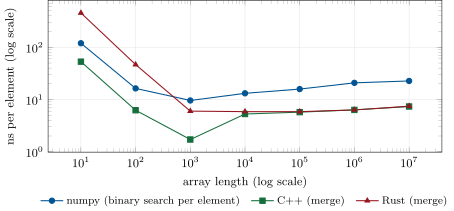
Time per element of the as-of lookup of n sorted times in n others. numpy’s binary search costs more per element as the arrays grow; the native merge pass costs a constant few nanoseconds once the fixed cost is amortised. Measured on a laptop (Intel Core Ultra 7 155H) under WSL2, one thread, machine otherwise idle. Data: bench_natext.py.
Figure 9.4. Time per element of the as-of lookup of nn sorted times in nn others. numpy’s binary search costs more per element as the arrays grow; the native merge pass costs a constant few nanoseconds once the fixed cost is amortised. Measured on a laptop (Intel Core Ultra 7 155H) under WSL2, one thread, machine otherwise idle. Data: bench_natext.py.
اقرأ في الفصل →