Coach
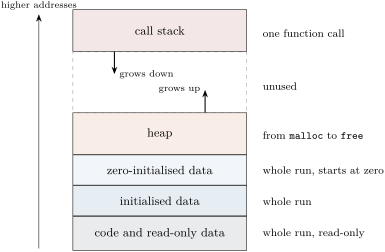
The memory layout of a process is the arrangement of a running program’s memory in regions. The code segment holds the machine code and, next to it, read-only data such as string literals; the data segment holds the variables that exist for the whole run, the initialised ones first and then the zero-initialised ones (traditionally called bss). Above them grows the heap, from which the program requests blocks while it runs (Chapter 5); near the top of the address space is the call stack, which holds the local variables of the functions being executed (Chapter 3).