
Todos os livros

Profissional

Apps Sobre Coach Entrar Começar a ler

Economics · Glossário

O que é First-, second- and third-generation crisis models?

Definition 14.3 University Economics — Year 3 · Capítulo 14 — Exchange-Rate Regimes and Currency Unions

A first-generation crisis model explains an attack on a peg by fundamentals inconsistent with it: domestic credit that grows while the peg holds drains reserves until speculators take the rest. A second-generation crisis model lets the government choose whether to defend, weighing the peg against its costs, so that expectations of devaluation can fulfil themselves. A third-generation crisis runs through balance sheets: banks and firms with debts in foreign currency are ruined by the devaluation, which turns a currency crisis into a banking and output crisis.
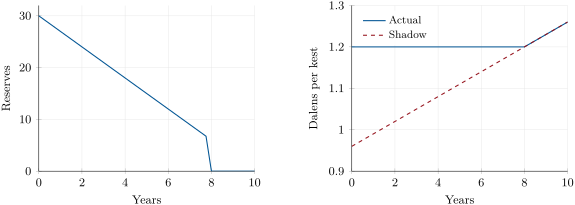
The first-generation model with the weekend problem’s numbers: reserves (billions of dalens, left) and the exchange rate with its shadow value (dalens per kest, right).
The first-generation model with the weekend problem’s numbers: reserves (billions of dalens, left) and the exchange rate with its shadow value (dalens per kest, right). Source: Our simulation (attack.py)
Ler no capítulo →