
全部书籍

专业

应用 关于 Coach 登录 开始阅读

书籍暂未推出简体中文版——当前显示英文版。

Economics · 术语表

什么是 First-, second- and third-generation crisis models?

Definition 14.3 University Economics — Year 3 · 第 14 章 — Exchange-Rate Regimes and Currency Unions

A first-generation crisis model explains an attack on a peg by fundamentals inconsistent with it: domestic credit that grows while the peg holds drains reserves until speculators take the rest. A second-generation crisis model lets the government choose whether to defend, weighing the peg against its costs, so that expectations of devaluation can fulfil themselves. A third-generation crisis runs through balance sheets: banks and firms with debts in foreign currency are ruined by the devaluation, which turns a currency crisis into a banking and output crisis.
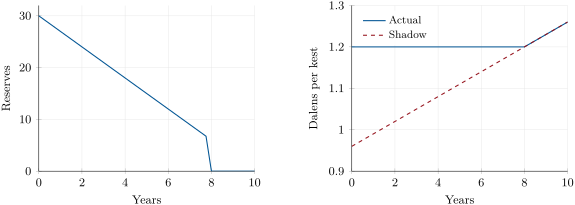
The first-generation model with the weekend problem’s numbers: reserves (billions of dalens, left) and the exchange rate with its shadow value (dalens per kest, right).
The first-generation model with the weekend problem’s numbers: reserves (billions of dalens, left) and the exchange rate with its shadow value (dalens per kest, right). Source: Our simulation (attack.py)
在原文中阅读 →