جميع الكتب

مهني

1 Markets I: The Ecosystem and Exchange-Traded Marketsالأسواق عبر الإنترنت 2 Markets II: Rates, FX and Creditالأسواق عبر الإنترنت 3 Markets III: Commodities, Energy and Cryptoالأسواق عبر الإنترنت 4 Quantitative Methodsالأساليب عبر الإنترنت 5 Derivatives and Volatilityالمشتقات عبر الإنترنت 6 Rates, Credit, XVA and Riskالفائدة والائتمان والمخاطر عبر الإنترنت 7 Research Craft: Predictors, Backtests, Measurement, Portfoliosالبحث عبر الإنترنت 8 Strategies I: Equities and Futuresالاستراتيجيات عبر الإنترنت 9 Strategies II: Volatility, Relative Value, Macro and the Bank Desksالاستراتيجيات عبر الإنترنت 10 Microstructure and Executionالتنفيذ عبر الإنترنت 11 Market Making and High-Frequency Tradingصناعة السوق عبر الإنترنت 12 Machine Learning for Marketsتعلم الآلة عبر الإنترنت 13 Low-Latency Softwareالتكنولوجيا عبر الإنترنت 14 Networks, Hardware and Trading Infrastructureالتكنولوجيا عبر الإنترنت 15 Research, Data and Risk Platformsالتكنولوجيا عبر الإنترنت 16 The Desk and the Firmالشركة عبر الإنترنت 17 The Industry: Firms, Roles and Careersالمسارات المهنية عبر الإنترنت 18 Interviews I: Maths, Probability and Speedالمسارات المهنية عبر الإنترنت 19 Interviews II: Markets, Trading Games and the Final Roundالمسارات المهنية عبر الإنترنت 20 Interviews III: Codeالمسارات المهنية عبر الإنترنت
التطبيقات حول المدرب تسجيل الدخول ابدأ القراءة

Economics · المسرد

ما معنى Payroll tax؟

Definition 22.5 Middle School Economics · الفصل 22 — Taxes and Public Spending

A payroll tax is a tax computed on the wages that employers pay, often used to pay for pensions and health care.
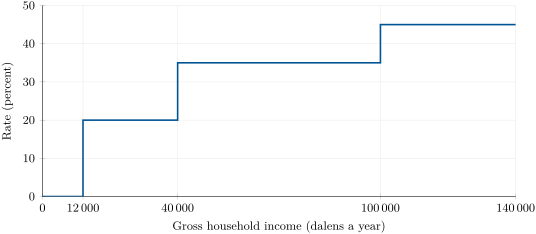

Brenland’s income tax, 2025: the rate paid on each additional dalen of gross household income.
Brenland’s income tax, 2025: the rate paid on each additional dalen of gross household income. Source: Brenland (invented)
اقرأ في الفصل →
Definition 17.8 University Economics — Year 3 · الفصل 17 — The Efficiency Cost of Taxation

A payroll tax is a tax levied on wages, paid by the employer, the employee or both, often to finance social insurance.
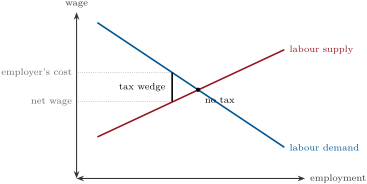
A payroll tax opens a wedge between the employer’s cost and the net wage. The wedge sits where it fits between the curves, wherever the law places it; the steeper (less elastic) curve takes the larger share.
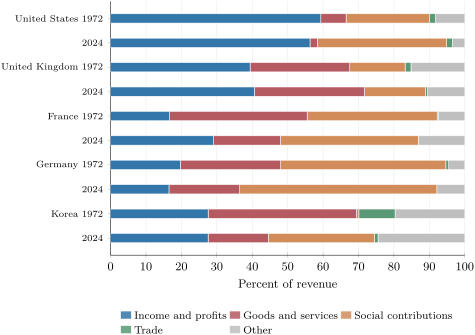
Central-government revenue by type, five economies, 1972 and 2024 (percent of revenue).
Central-government revenue by type, five economies, 1972 and 2024 (percent of revenue). Source: World Bank, World Development Indicators (GC.TAX.YPKG.RV.ZS, GC.TAX.GSRV.RV.ZS, GC.REV.SOCL.ZS, GC.TAX.INTT.RV.ZS); other is the remainder
اقرأ في الفصل →