全部书籍

专业

应用 关于 Coach 登录 开始阅读

书籍暂未推出简体中文版——当前显示英文版。

Economics · 术语表

什么是 Payroll tax?

Definition 22.5 Middle School Economics · 第 22 章 — Taxes and Public Spending

A payroll tax is a tax computed on the wages that employers pay, often used to pay for pensions and health care.
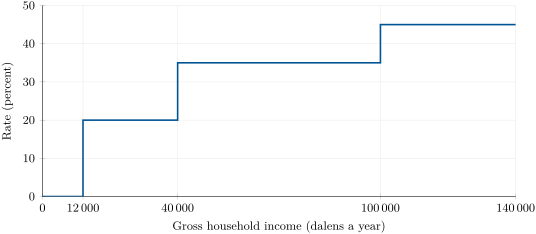

Brenland’s income tax, 2025: the rate paid on each additional dalen of gross household income.
Brenland’s income tax, 2025: the rate paid on each additional dalen of gross household income. Source: Brenland (invented)
在原文中阅读 →
Definition 17.8 University Economics — Year 3 · 第 17 章 — The Efficiency Cost of Taxation

A payroll tax is a tax levied on wages, paid by the employer, the employee or both, often to finance social insurance.
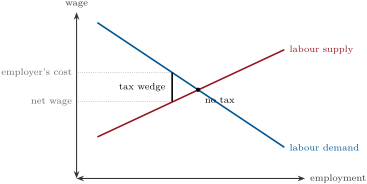
A payroll tax opens a wedge between the employer’s cost and the net wage. The wedge sits where it fits between the curves, wherever the law places it; the steeper (less elastic) curve takes the larger share.
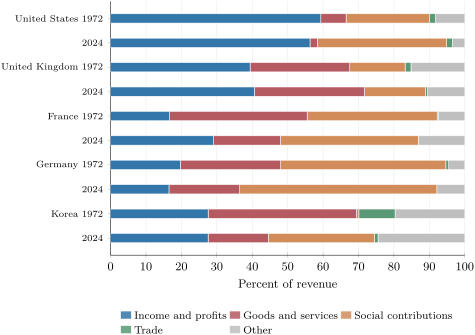
Central-government revenue by type, five economies, 1972 and 2024 (percent of revenue).
Central-government revenue by type, five economies, 1972 and 2024 (percent of revenue). Source: World Bank, World Development Indicators (GC.TAX.YPKG.RV.ZS, GC.TAX.GSRV.RV.ZS, GC.REV.SOCL.ZS, GC.TAX.INTT.RV.ZS); other is the remainder
在原文中阅读 →