
جميع الكتب

مهني

1 Markets I: The Ecosystem and Exchange-Traded Marketsالأسواق عبر الإنترنت 2 Markets II: Rates, FX and Creditالأسواق عبر الإنترنت 3 Markets III: Commodities, Energy and Cryptoالأسواق عبر الإنترنت 4 Quantitative Methodsالأساليب عبر الإنترنت 5 Derivatives and Volatilityالمشتقات عبر الإنترنت 6 Rates, Credit, XVA and Riskالفائدة والائتمان والمخاطر عبر الإنترنت 7 Research Craft: Predictors, Backtests, Measurement, Portfoliosالبحث عبر الإنترنت 8 Strategies I: Equities and Futuresالاستراتيجيات عبر الإنترنت 9 Strategies II: Volatility, Relative Value, Macro and the Bank Desksالاستراتيجيات عبر الإنترنت 10 Microstructure and Executionالتنفيذ عبر الإنترنت 11 Market Making and High-Frequency Tradingصناعة السوق عبر الإنترنت 12 Machine Learning for Marketsتعلم الآلة عبر الإنترنت 13 Low-Latency Softwareالتكنولوجيا عبر الإنترنت 14 Networks, Hardware and Trading Infrastructureالتكنولوجيا عبر الإنترنت 15 Research, Data and Risk Platformsالتكنولوجيا عبر الإنترنت 16 The Desk and the Firmالشركة عبر الإنترنت 17 The Industry: Firms, Roles and Careersالمسارات المهنية عبر الإنترنت 18 The Interview Bookالمسارات المهنية عبر الإنترنت
التطبيقات حول المدرب تسجيل الدخول ابدأ القراءة

Quantitative Finance · المسرد

ما معنى Clustering, k-means, hierarchical clustering؟

يُعرف أيضًا باسم: clustering · k-means · hierarchical clustering

Definition 20.1 Machine Learning for Markets · الفصل 20 — Clustering, Regimes and Anomaly Detection

Clustering partitions objects into groups whose members are more similar to each other than to others, without labels. k-means chooses kk centres and assigns each object to the nearest, alternating the two steps to minimise the within-group sum of squared distances (Lloyd’s algorithm). Hierarchical clustering merges the closest groups step by step into a tree and cuts it at the desired number of groups; for assets the usual distance is 2(1−ρij)\sqrt{2(1-\rho_{ij})} between return series (Mantegna, 1999), the one behind hierarchical risk parity (Book 7, chapter 26).
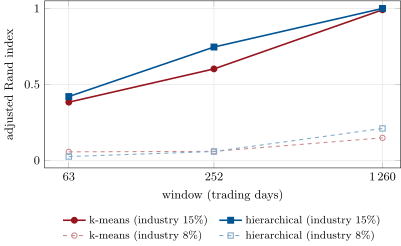
Agreement of return-based clusters with the planted industries, by the length of the return history and the strength of the industry factor. Data: ml_regimes.clustering.
Figure 20.1. Agreement of return-based clusters with the planted industries, by the length of the return history and the strength of the industry factor. Data: ml_regimes.clustering.
اقرأ في الفصل →