
جميع الكتب

مهني

1 Markets I: The Ecosystem and Exchange-Traded Marketsالأسواق عبر الإنترنت 2 Markets II: Rates, FX and Creditالأسواق عبر الإنترنت 3 Markets III: Commodities, Energy and Cryptoالأسواق عبر الإنترنت 4 Quantitative Methodsالأساليب عبر الإنترنت 5 Derivatives and Volatilityالمشتقات عبر الإنترنت 6 Rates, Credit, XVA and Riskالفائدة والائتمان والمخاطر عبر الإنترنت 7 Research Craft: Predictors, Backtests, Measurement, Portfoliosالبحث عبر الإنترنت 8 Strategies I: Equities and Futuresالاستراتيجيات عبر الإنترنت 9 Strategies II: Volatility, Relative Value, Macro and the Bank Desksالاستراتيجيات عبر الإنترنت 10 Microstructure and Executionالتنفيذ عبر الإنترنت 11 Market Making and High-Frequency Tradingصناعة السوق عبر الإنترنت 12 Machine Learning for Marketsتعلم الآلة عبر الإنترنت 13 Low-Latency Softwareالتكنولوجيا عبر الإنترنت 14 Networks, Hardware and Trading Infrastructureالتكنولوجيا عبر الإنترنت 15 Research, Data and Risk Platformsالتكنولوجيا عبر الإنترنت 16 The Desk and the Firmالشركة عبر الإنترنت 17 The Industry: Firms, Roles and Careersالمسارات المهنية عبر الإنترنت 18 The Interview Bookالمسارات المهنية عبر الإنترنت
التطبيقات حول المدرب تسجيل الدخول ابدأ القراءة

Quantitative Finance · المسرد

ما معنى Collar, three-way collar؟

يُعرف أيضًا باسم: collar · three-way collar

Definition 12.6 Markets III: Commodities, Energy and Crypto · الفصل 12 — Commodity Options and Structured Hedges

A producer’s collar buys a put and sells a call, usually with strikes chosen so that the premiums cancel (a zero-cost collar): its realised price is kept between the two strikes. A three-way collar adds a sold put below the bought one: the producer is protected only between the two put strikes, and the extra premium lets it raise the floor or the cap.
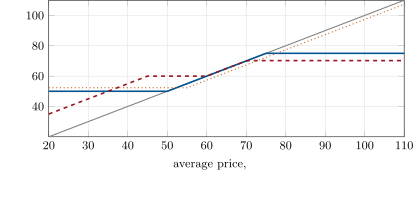
A producer’s realised price per barrel against the year’s average price. The collar keeps it between $50 and $75; the three-way protects from $60 down to $45 only, then follows the price down with a $15 cushion, and gives up everything above $70.24; the bought put keeps all the upside at the cost of its premium. Illustrative; data: the chapter’s tutorial.
Figure 12.3. A producer’s realised price per barrel against the year’s average price. The collar keeps it between $50 and $75; the three-way protects from $60 down to $45 only, then follows the price down with a $15 cushion, and gives up everything above $70.24; the bought put keeps all the upside at the cost of its premium. Illustrative; data: the chapter’s tutorial.
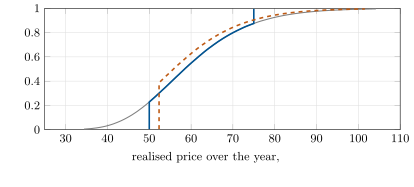
Distribution of a producer’s realised average price over a year, simulated from a $60 future with 35% volatility: unhedged, with the 50/75 collar, and with the 55 average-price put net of its $2.66 premium. The collar truncates both tails; the put truncates only the lower one, at a cost. Illustrative; data: the chapter’s tutorial.
Figure 12.4. Distribution of a producer’s realised average price over a year, simulated from a $60 future with 35% volatility: unhedged, with the 50/75 collar, and with the 55 average-price put net of its $2.66 premium. The collar truncates both tails; the put truncates only the lower one, at a cost. Illustrative; data: the chapter’s tutorial.

أمثلة

Example 12.7 (What each structure costs)

With the future at $60, 35% volatility and a year of monthly averaging, the 50/75 collar costs $0.07 a barrel, close to zero; the 55 average-price put costs $2.66. A three-way that buys the 60 put and sells the 45 put costs the same $2.66 if it also sells a call at $70.24. A producer with a budget of $50 a barrel would, unhedged, fall $8.43 short of it in the worst 5% of years; with either the collar or the put its worst-5% realised price stays above the budget.

اقرأ في الفصل →