
جميع الكتب

مهني

1 Markets I: The Ecosystem and Exchange-Traded Marketsالأسواق عبر الإنترنت 2 Markets II: Rates, FX and Creditالأسواق عبر الإنترنت 3 Markets III: Commodities, Energy and Cryptoالأسواق عبر الإنترنت 4 Quantitative Methodsالأساليب عبر الإنترنت 5 Derivatives and Volatilityالمشتقات عبر الإنترنت 6 Rates, Credit, XVA and Riskالفائدة والائتمان والمخاطر عبر الإنترنت 7 Research Craft: Predictors, Backtests, Measurement, Portfoliosالبحث عبر الإنترنت 8 Strategies I: Equities and Futuresالاستراتيجيات عبر الإنترنت 9 Strategies II: Volatility, Relative Value, Macro and the Bank Desksالاستراتيجيات عبر الإنترنت 10 Microstructure and Executionالتنفيذ عبر الإنترنت 11 Market Making and High-Frequency Tradingصناعة السوق عبر الإنترنت 12 Machine Learning for Marketsتعلم الآلة عبر الإنترنت 13 Low-Latency Softwareالتكنولوجيا عبر الإنترنت 14 Networks, Hardware and Trading Infrastructureالتكنولوجيا عبر الإنترنت 15 Research, Data and Risk Platformsالتكنولوجيا عبر الإنترنت 16 The Desk and the Firmالشركة عبر الإنترنت 17 The Industry: Firms, Roles and Careersالمسارات المهنية عبر الإنترنت 18 The Interview Bookالمسارات المهنية عبر الإنترنت
التطبيقات حول المدرب تسجيل الدخول ابدأ القراءة

Quantitative Finance · المسرد

ما معنى Economic value of equity, NII sensitivity؟

يُعرف أيضًا باسم: economic value of equity · net interest income sensitivity

Definition 24.7 Rates, Credit, XVA and Risk · الفصل 24 — Liquidity and Funding Risk; Bank Treasury

The economic value of equity (EVE) is the present value of the banking book’s asset cash flows less that of its liability cash flows (deposits slotted by behavioural models). Net interest income sensitivity is the change in the next year’s interest income less interest expense under a rate scenario, on a constant balance sheet.
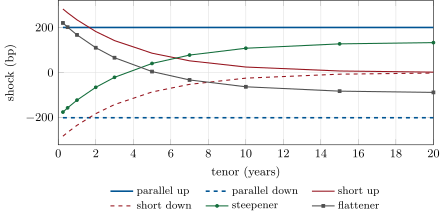
The six supervisory interest rate shocks for the US dollar by tenor: parallel ±200 basis points, short-rate ±300 decaying with tenor, and the two rotations built from the short and long shocks. Data: Basel Committee IRRBB standard (2016); the chapter’s tutorial.
Figure 24.1. The six supervisory interest rate shocks for the US dollar by tenor: parallel ±200\pm200 basis points, short-rate ±300\pm300 decaying with tenor, and the two rotations built from the short and long shocks. Data: Basel Committee IRRBB standard (2016); the chapter’s tutorial.
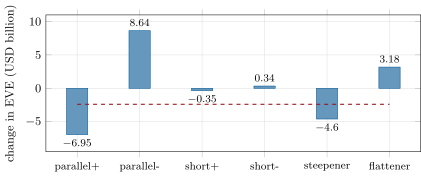
Change in the stylised bank’s economic value of equity under the six supervisory shocks, at a 1% rate. The dashed line is the outlier threshold, a loss of 15% of Tier 1 (2.4); the parallel-up and steepener scenarios cross it. Data: the chapter’s tutorial.
Figure 24.2. Change in the stylised bank’s economic value of equity under the six supervisory shocks, at a 1% rate. The dashed line is the outlier threshold, a loss of 15% of Tier 1 (2.4); the parallel-up and steepener scenarios cross it. Data: the chapter’s tutorial.
اقرأ في الفصل →