جميع الكتب

مهني

1 Markets I: The Ecosystem and Exchange-Traded Marketsالأسواق عبر الإنترنت 2 Markets II: Rates, FX and Creditالأسواق عبر الإنترنت 3 Markets III: Commodities, Energy and Cryptoالأسواق عبر الإنترنت 4 Quantitative Methodsالأساليب عبر الإنترنت 5 Derivatives and Volatilityالمشتقات عبر الإنترنت 6 Rates, Credit, XVA and Riskالفائدة والائتمان والمخاطر عبر الإنترنت 7 Research Craft: Predictors, Backtests, Measurement, Portfoliosالبحث عبر الإنترنت 8 Strategies I: Equities and Futuresالاستراتيجيات عبر الإنترنت 9 Strategies II: Volatility, Relative Value, Macro and the Bank Desksالاستراتيجيات عبر الإنترنت 10 Microstructure and Executionالتنفيذ عبر الإنترنت 11 Market Making and High-Frequency Tradingصناعة السوق عبر الإنترنت 12 Machine Learning for Marketsتعلم الآلة عبر الإنترنت 13 Low-Latency Softwareالتكنولوجيا عبر الإنترنت 14 Networks, Hardware and Trading Infrastructureالتكنولوجيا عبر الإنترنت 15 Research, Data and Risk Platformsالتكنولوجيا عبر الإنترنت 16 The Desk and the Firmالشركة عبر الإنترنت 17 The Industry: Firms, Roles and Careersالمسارات المهنية عبر الإنترنت 18 The Interview Bookالمسارات المهنية عبر الإنترنت
التطبيقات حول المدرب تسجيل الدخول ابدأ القراءة

Quantitative Finance · المسرد

ما معنى Moving-average crossover, linear filter؟

يُعرف أيضًا باسم: moving-average crossover · linear filter

Definition 7.6 Research Craft: Predictors, Backtests, Measurement, Portfolios · الفصل 7 — Price and Volume Features

A moving-average crossover with windows n<mn < m is the logarithm of the ratio of the average of the last nn prices to the average of the last mm prices; the classic rule is long when it is positive. A linear filter of returns is a predictor of the form ∑j≥0wjrt−j\sum_{j \ge 0} w_jr_{t-j} with fixed weights wjw_j.

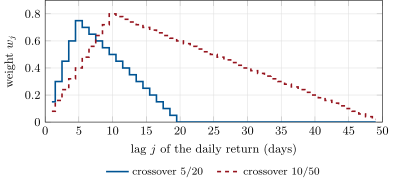
Weights a moving-average crossover puts on each past daily return (): rising over the short window, then falling linearly to zero at the long window. The 5/20 crossover sums to 7.5 and peaks at lag 5; the 10/50 to 20 and peaks at lag 10.
Figure 7.3. Weights a moving-average crossover puts on each past daily return (Proposition 7.7): rising over the short window, then falling linearly to zero at the long window. The 5/20 crossover sums to 7.5 and peaks at lag 5; the 10/50 to 20 and peaks at lag 10.
اقرأ في الفصل →