
جميع الكتب

مهني

1 Markets I: The Ecosystem and Exchange-Traded Marketsالأسواق عبر الإنترنت 2 Markets II: Rates, FX and Creditالأسواق عبر الإنترنت 3 Markets III: Commodities, Energy and Cryptoالأسواق عبر الإنترنت 4 Quantitative Methodsالأساليب عبر الإنترنت 5 Derivatives and Volatilityالمشتقات عبر الإنترنت 6 Rates, Credit, XVA and Riskالفائدة والائتمان والمخاطر عبر الإنترنت 7 Research Craft: Predictors, Backtests, Measurement, Portfoliosالبحث عبر الإنترنت 8 Strategies I: Equities and Futuresالاستراتيجيات عبر الإنترنت 9 Strategies II: Volatility, Relative Value, Macro and the Bank Desksالاستراتيجيات عبر الإنترنت 10 Microstructure and Executionالتنفيذ عبر الإنترنت 11 Market Making and High-Frequency Tradingصناعة السوق عبر الإنترنت 12 Machine Learning for Marketsتعلم الآلة عبر الإنترنت 13 Low-Latency Softwareالتكنولوجيا عبر الإنترنت 14 Networks, Hardware and Trading Infrastructureالتكنولوجيا عبر الإنترنت 15 Research, Data and Risk Platformsالتكنولوجيا عبر الإنترنت 16 The Desk and the Firmالشركة عبر الإنترنت 17 The Industry: Firms, Roles and Careersالمسارات المهنية عبر الإنترنت 18 The Interview Bookالمسارات المهنية عبر الإنترنت
التطبيقات حول المدرب تسجيل الدخول ابدأ القراءة

Quantitative Finance · المسرد

ما معنى Network Time Protocol, Precision Time Protocol؟

يُعرف أيضًا باسم: Network Time Protocol · Precision Time Protocol

Definition 4.5 Networks, Hardware and Trading Infrastructure · الفصل 4 — Time Synchronisation

The Network Time Protocol (NTP) synchronises a client to servers by request-response exchanges over UDP, typically every few seconds to minutes, with timestamps taken in software. The Precision Time Protocol (PTP, IEEE 1588) synchronises clocks on a network to a master by frequent exchanges, many a second, designed for timestamps taken in the network hardware and for switches that take part in the protocol.
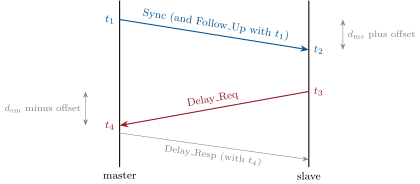
PTP’s delay request-response exchange. t_1 and t_4 are read on the master’s clock, t_2 and t_3 on the slave’s. The first difference is the path delay from master to slave plus the slave’s offset; the second is the path delay back minus the offset. Time runs downward.
Figure 4.1. PTP’s delay request-response exchange. t1t_1 and t4t_4 are read on the master’s clock, t2t_2 and t3t_3 on the slave’s. The first difference is the path delay from master to slave plus the slave’s offset; the second is the path delay back minus the offset. Time runs downward.
اقرأ في الفصل →