
جميع الكتب

مهني

1 Markets I: The Ecosystem and Exchange-Traded Marketsالأسواق عبر الإنترنت 2 Markets II: Rates, FX and Creditالأسواق عبر الإنترنت 3 Markets III: Commodities, Energy and Cryptoالأسواق عبر الإنترنت 4 Quantitative Methodsالأساليب عبر الإنترنت 5 Derivatives and Volatilityالمشتقات عبر الإنترنت 6 Rates, Credit, XVA and Riskالفائدة والائتمان والمخاطر عبر الإنترنت 7 Research Craft: Predictors, Backtests, Measurement, Portfoliosالبحث عبر الإنترنت 8 Strategies I: Equities and Futuresالاستراتيجيات عبر الإنترنت 9 Strategies II: Volatility, Relative Value, Macro and the Bank Desksالاستراتيجيات عبر الإنترنت 10 Microstructure and Executionالتنفيذ عبر الإنترنت 11 Market Making and High-Frequency Tradingصناعة السوق عبر الإنترنت 12 Machine Learning for Marketsتعلم الآلة عبر الإنترنت 13 Low-Latency Softwareالتكنولوجيا عبر الإنترنت 14 Networks, Hardware and Trading Infrastructureالتكنولوجيا عبر الإنترنت 15 Research, Data and Risk Platformsالتكنولوجيا عبر الإنترنت 16 The Desk and the Firmالشركة عبر الإنترنت 17 The Industry: Firms, Roles and Careersالمسارات المهنية عبر الإنترنت 18 The Interview Bookالمسارات المهنية عبر الإنترنت
التطبيقات حول المدرب تسجيل الدخول ابدأ القراءة

Quantitative Finance · المسرد

ما معنى Private endpoint, network load balancer؟

يُعرف أيضًا باسم: private endpoint · network load balancer

Definition 18.2 Networks, Hardware and Trading Infrastructure · الفصل 18 — Private Connectivity to Crypto Venues

A private endpoint is a network interface that a provider places in a customer’s virtual network, in chosen zones, through which the customer reaches another party’s service privately, without routing between the two networks. A network load balancer is the provider’s service that receives connections on one address and spreads them over target machines, at the level of TCP or UDP; a private-endpoint service is typically exposed through one.
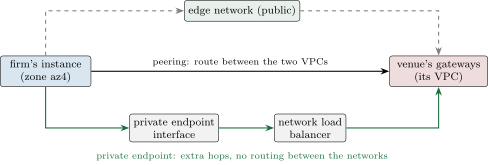
Three ways from a firm’s instance to a venue in the same cloud region, schematically: peering between the two virtual networks, a private endpoint (an interface in the firm’s network, a load balancer in front of the venue’s gateways), and the public endpoint through an edge network.
Figure 18.1. Three ways from a firm’s instance to a venue in the same cloud region, schematically: peering between the two virtual networks, a private endpoint (an interface in the firm’s network, a load balancer in front of the venue’s gateways), and the public endpoint through an edge network.
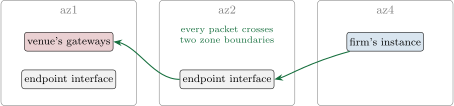
The endpoint in the wrong zone, schematically: the venue’s gateways in az1, its endpoint’s interfaces in az1 and az2, the firm’s instance in az4; the firm’s packets enter the interface in az2 and cross to the gateways through the load balancer. No placement of the endpoint keeps this path in one zone (); moving the instance to az1 does. Zone labels are identifiers, not names.
Figure 18.2. The endpoint in the wrong zone, schematically: the venue’s gateways in az1, its endpoint’s interfaces in az1 and az2, the firm’s instance in az4; the firm’s packets enter the interface in az2 and cross to the gateways through the load balancer. No placement of the endpoint keeps this path in one zone (Proposition 18.3); moving the instance to az1 does. Zone labels are identifiers, not names.
اقرأ في الفصل →