 Coach
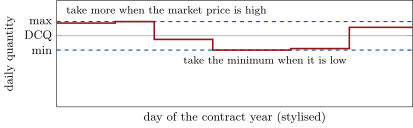
CoachA swing contract lets its holder choose, each day, a quantity between a minimum and a maximum around a daily contract quantity, at a fixed or indexed price, subject to limits on the total taken over the year. A take-or-pay clause obliges the buyer to pay for a minimum annual quantity whether or not it takes it.
Ejemplos
Example 12.5 (Three days of swing)
A buyer holds a three-day contract at with a daily contract quantity of 100 MWh, a swing of 20 MWh either way, and a total that must equal 300 MWh. Market prices turn out to be 30, 50 and 40. Taking 80 on the first day (buying the missing 20 in the market at 30) and 120 on the second (selling the extra 20 at 50) is worth euros more than taking 100 every day. With prices unknown in advance, the holder must decide each day, and the flexibility is worth less than this perfect-foresight value.