
جميع الكتب

مهني

1 Markets I: The Ecosystem and Exchange-Traded Marketsالأسواق عبر الإنترنت 2 Markets II: Rates, FX and Creditالأسواق عبر الإنترنت 3 Markets III: Commodities, Energy and Cryptoالأسواق عبر الإنترنت 4 Quantitative Methodsالأساليب عبر الإنترنت 5 Derivatives and Volatilityالمشتقات عبر الإنترنت 6 Rates, Credit, XVA and Riskالفائدة والائتمان والمخاطر عبر الإنترنت 7 Research Craft: Predictors, Backtests, Measurement, Portfoliosالبحث عبر الإنترنت 8 Strategies I: Equities and Futuresالاستراتيجيات عبر الإنترنت 9 Strategies II: Volatility, Relative Value, Macro and the Bank Desksالاستراتيجيات عبر الإنترنت 10 Microstructure and Executionالتنفيذ عبر الإنترنت 11 Market Making and High-Frequency Tradingصناعة السوق عبر الإنترنت 12 Machine Learning for Marketsتعلم الآلة عبر الإنترنت 13 Low-Latency Softwareالتكنولوجيا عبر الإنترنت 14 Networks, Hardware and Trading Infrastructureالتكنولوجيا عبر الإنترنت 15 Research, Data and Risk Platformsالتكنولوجيا عبر الإنترنت 16 The Desk and the Firmالشركة عبر الإنترنت 17 The Industry: Firms, Roles and Careersالمسارات المهنية عبر الإنترنت 18 The Interview Bookالمسارات المهنية عبر الإنترنت
التطبيقات حول المدرب تسجيل الدخول ابدأ القراءة

Quantitative Finance · المسرد

ما معنى Tail latency, jitter؟

يُعرف أيضًا باسم: tail latency · jitter

Definition 1.5 Low-Latency Software · الفصل 1 — Where Latency Comes From

The tail latency of a system is the upper part of its latency distribution, reported as high percentiles: the 99th (p99), the 99.9th (p99.9), the maximum over a period. Jitter is the variability of latency from one occurrence to the next, reported as a spread (p99 minus p50, or a standard deviation); a system with low jitter is one whose tail is close to its median.
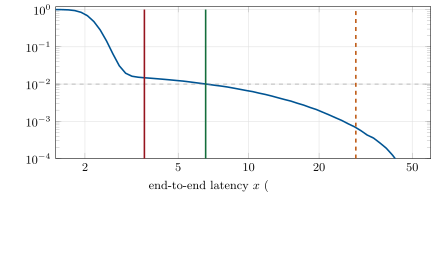
The tail of a synthetic six-stage path whose stages each stall 0.3% of the time. The sum of the stage p99s misses the stalls and understates the path’s p99; the union bound of  overstates it. Data: ll_budget.composition, 400 000 simulated messages.
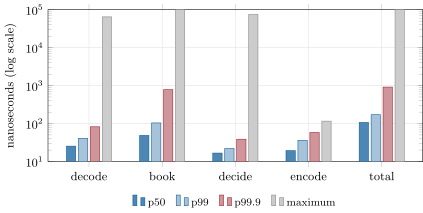
Figure 1.2. The tail of a synthetic six-stage path whose stages each stall 0.3% of the time. The sum of the stage p99s misses the stalls and understates the path’s p99; the union bound of Proposition 1.6 overstates it. Data: ll_budget.composition, 400 000 simulated messages.
Per-message latency of the stages of a toy tick-to-trade path (decode one message, apply it to Book 1’s book, decide, encode an order), over 200 replays of Book 1’s 2 020-message sample, pinned to one CPU. Measured on a laptop (Intel Core Ultra 7 155H) under WSL2, no isolated cores; each figure includes the timer’s own cost of about 15\, n s. Data: bench_path.py.
Figure 1.3. Per-message latency of the stages of a toy tick-to-trade path (decode one message, apply it to Book 1’s book, decide, encode an order), over 200 replays of Book 1’s 2 020-message sample, pinned to one CPU. Measured on a laptop (Intel Core Ultra 7 155H) under WSL2, no isolated cores; each figure includes the timer’s own cost of about 15 ns15\,\mathrm{n}\mathrm{s}. Data: bench_path.py.
اقرأ في الفصل →