 Coach
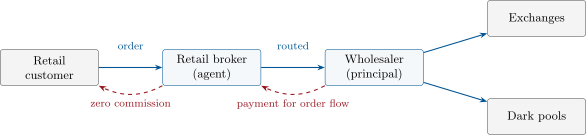
CoachA wholesaler is a market-making firm that receives the marketable orders of retail brokers’ customers and executes most of them as principal, against its own account, away from any exchange. Internalisation is the execution of a client order against the executing firm’s own inventory instead of against other investors’ orders on a venue.
Exemples
Example 10.6 (Reading one fill)
The national best quote is ; a customer’s market purchase of 100 shares is filled at 20.018. Price improvement: 0.2 cent a share, 20 cents on the order. Effective half-spread: cent. Five minutes later the mid is 20.013: the realised half-spread is cent and the price impact 0.3 cent. The wholesaler’s gross revenue on this fill was 50 cents, out of which it pays the broker and its own costs.
Example 10.8 (The same cent, two flows)
Take cent, cents, cent. On an exchange, where 35% of the orders hitting a quote are informed, a market maker earns before costs: the quoted spread is, in equilibrium, barely enough. For retail flow with and : cent. The wholesaler can pay the broker 0.25 cent and keep 0.30 (Figure 10.2). Nothing here depends on speed or on being cleverer than the customer: the value lies entirely in the segmentation of orders by how much they know.