Coach
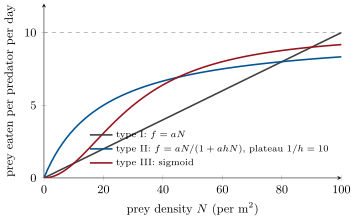
CoachThe functional response of a predator is the number of prey one predator eats per unit time as a function of prey density . Type I: proportional to (a filter-feeder). Type II: rises then saturates, because each prey takes a handling time to catch, eat and digest, during which no other can be taken. Type III: sigmoid — low at low density because the predator ignores or cannot find rare prey, then rising steeply (a predator that switches to whatever is common). The numerical response is the change in the number of predators with prey density, through reproduction or immigration.