 Coach
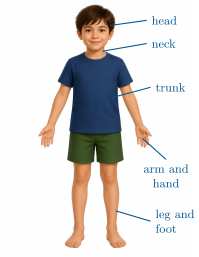
CoachThe human body has three main parts:
- the head, which carries the face, the eyes, the ears, the nose and the mouth;
- the trunk, the middle of the body — chest, belly and back;
- the limbs: two arms ending in hands, two legs ending in feet.
The head sits on the neck, which joins it to the trunk.
Examples
Example 4.2 (Same plan as the cat?)
Compare yourself with the cat: head, body, four limbs — the plan looks alike. But the cat walks on all four; you stand on two legs and keep two arms free for carrying, drawing and waving. And where the cat has a tail, you have none.