
All books

Professional

Apps About Coach Log in Start reading

Chemistry · Glossary

What is Electrochemical cell?

Also known as: half-cell · salt bridge · anode · cathode · cell voltage

Definition 13.6 University Chemistry — Year 1 · Chapter 13 — Redox Equilibria and the Nernst Equation

An electrochemical cell is two half-cells, each made of a couple and an electronic conductor, the electrode, joined by an ionic conductor, often a salt bridge (a gel or tube of a concentrated inert salt such as potassium nitrate). The electrode where oxidation takes place is the anode, the one where reduction takes place the cathode. The cell voltage is the difference of electric potential between the two electrodes, positive pole minus negative pole, measured when no current flows.
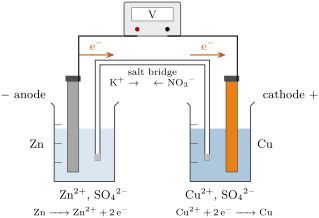
The zinc–copper (Daniell) cell. Zinc is oxidised at the anode, the negative pole; copper ions are reduced at the cathode, the positive pole. Electrons flow through the external circuit from zinc to copper; in the salt bridge the cations move towards the cathode and the anions towards the anode, keeping each solution neutral.
Read in context →