جميع الكتب

مهني

1 Markets I: The Ecosystem and Exchange-Traded Marketsالأسواق عبر الإنترنت 2 Markets II: Rates, FX and Creditالأسواق عبر الإنترنت 3 Markets III: Commodities, Energy and Cryptoالأسواق عبر الإنترنت 4 Quantitative Methodsالأساليب عبر الإنترنت 5 Derivatives and Volatilityالمشتقات عبر الإنترنت 6 Rates, Credit, XVA and Riskالفائدة والائتمان والمخاطر عبر الإنترنت 7 Research Craft: Predictors, Backtests, Measurement, Portfoliosالبحث عبر الإنترنت 8 Strategies I: Equities and Futuresالاستراتيجيات عبر الإنترنت 9 Strategies II: Volatility, Relative Value, Macro and the Bank Desksالاستراتيجيات عبر الإنترنت 10 Microstructure and Executionالتنفيذ عبر الإنترنت 11 Market Making and High-Frequency Tradingصناعة السوق عبر الإنترنت 12 Machine Learning for Marketsتعلم الآلة عبر الإنترنت 13 Low-Latency Softwareالتكنولوجيا عبر الإنترنت 14 Networks, Hardware and Trading Infrastructureالتكنولوجيا عبر الإنترنت 15 Research, Data and Risk Platformsالتكنولوجيا عبر الإنترنت 16 The Desk and the Firmالشركة عبر الإنترنت 17 The Industry: Firms, Roles and Careersالمسارات المهنية عبر الإنترنت 18 Interviews I: Maths, Probability and Speedالمسارات المهنية عبر الإنترنت 19 Interviews II: Markets, Trading Games and the Final Roundالمسارات المهنية عبر الإنترنت 20 Interviews III: Codeالمسارات المهنية عبر الإنترنت
التطبيقات حول المدرب تسجيل الدخول ابدأ القراءة

Computer Science · المسرد

ما معنى ASCII؟

Definition 5.3 High School Computer Science · الفصل 5 — Text Encodings: From ASCII to UTF-8

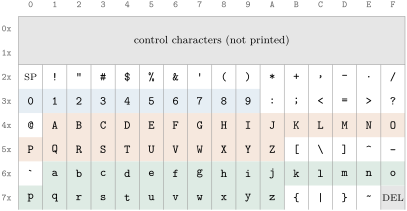
ASCII (American Standard Code for Information Interchange, 1968) is a code table of 128128 characters, numbered from 00 to 127127, so that each fits in 77 bits. Codes 00 to 3131 and 127127 are control characters (line feed, tabulation, …), which are not printed; codes 3232 to 126126 are the space, the digits, the English letters in both cases and punctuation. As an encoding, ASCII stores each character in one byte whose leftmost bit is 00.

The ASCII table in rows of 16: the row gives the first hexadecimal digit, the column the second. Digits (blue) start at 30, capital letters (orange) at 41 and small letters (green) at 61, exactly 20 hexadecimal, that is 32, further on.
The ASCII table in rows of 1616: the row gives the first hexadecimal digit, the column the second. Digits (blue) start at 30, capital letters (orange) at 41 and small letters (green) at 61, exactly 20 hexadecimal, that is 3232, further on.
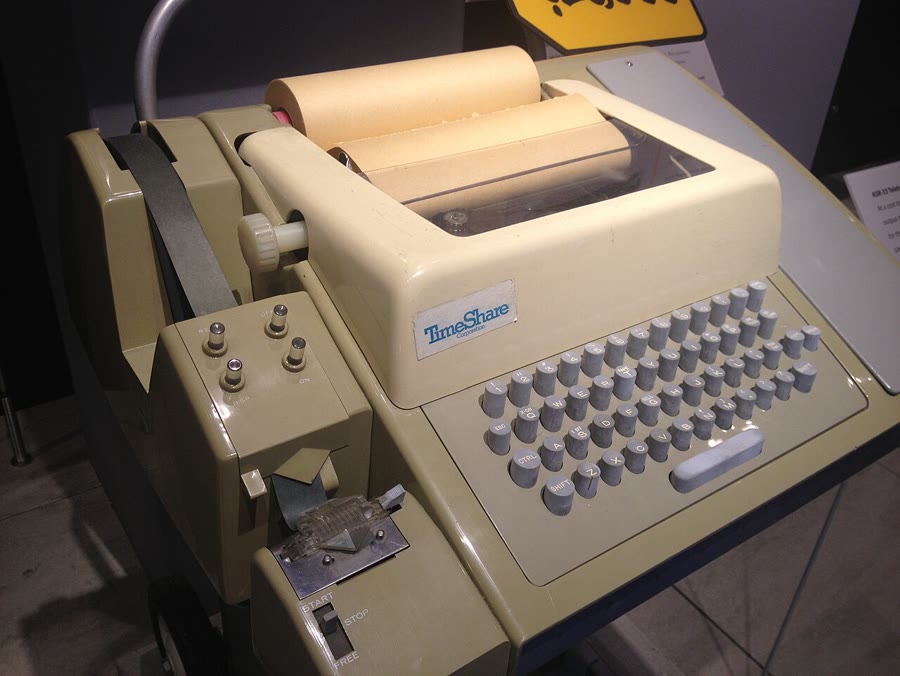
A Teletype ASR-33 teleprinter at the Computer History Museum: a keyboard below, and a printer on a roll of paper above. Photograph: Arnold Reinhold, CC BY-SA 3.0.
اقرأ في الفصل →