All books

Professional

Apps About Coach Log in Start reading

Earth and Space Sciences · Glossary

What is Andesite; diorite; rhyolite?

Also known as: andesite · diorite · rhyolite

Definition 17.5 High School Earth and Space Sciences · Chapter 17 — Igneous Rocks

Andesite and diorite are the volcanic and the plutonic rock of intermediate composition, made mostly of plagioclase with amphibole or pyroxene. Rhyolite is the volcanic rock of felsic composition, the fine-grained equivalent of granite.
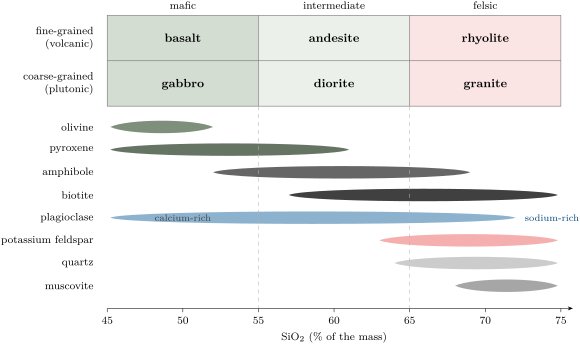
Naming the common igneous rocks (a drawing). Columns: the silica content of the magma; rows: fine-grained (volcanic) and coarse-grained (plutonic) rocks. Below, where each rock-forming mineral is common: olivine and pyroxene in mafic rocks with calcium-rich plagioclase; amphibole and plagioclase in intermediate rocks; potassium feldspar, quartz, sodium-rich plagioclase and micas in felsic rocks. The boundaries are gradual.
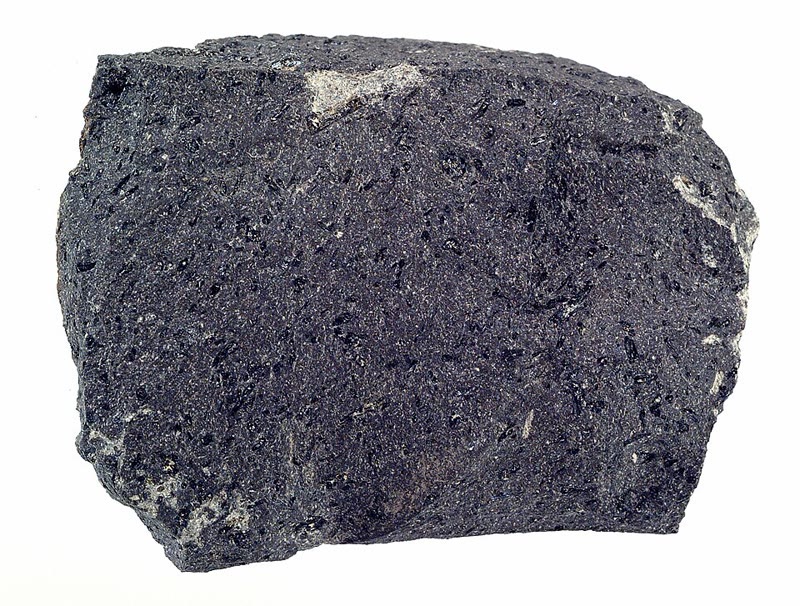
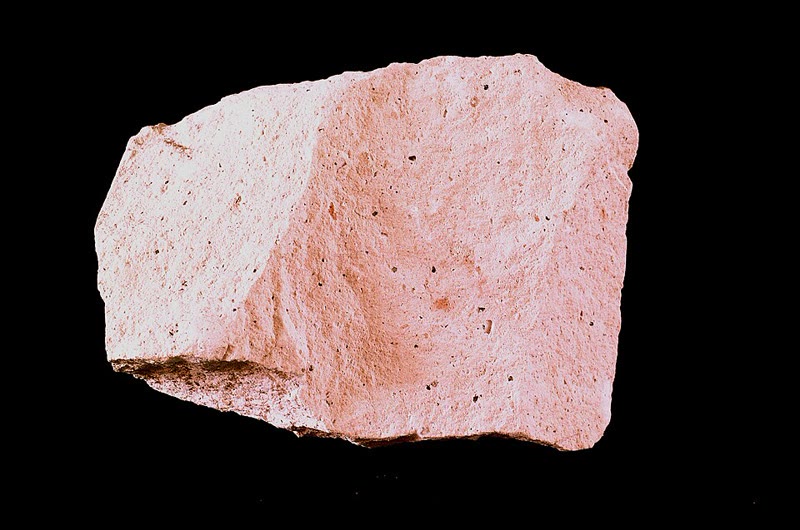
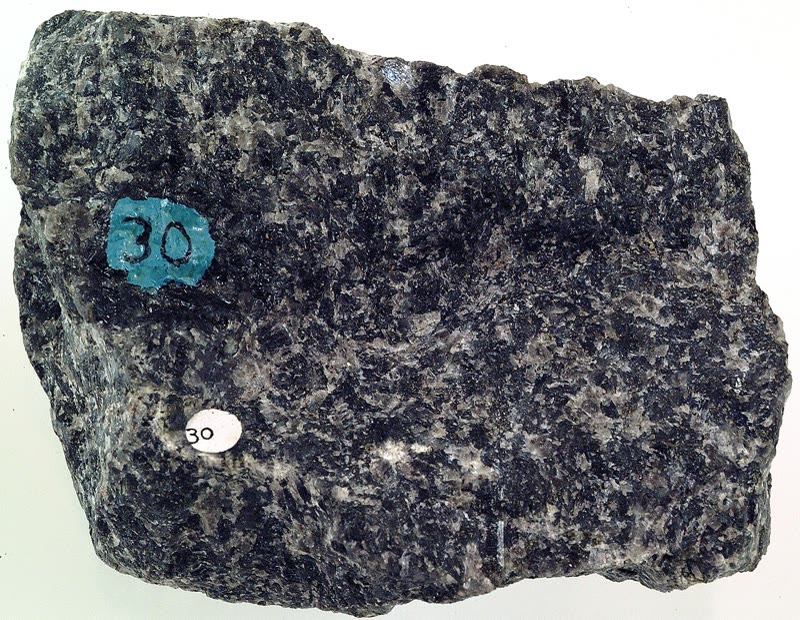
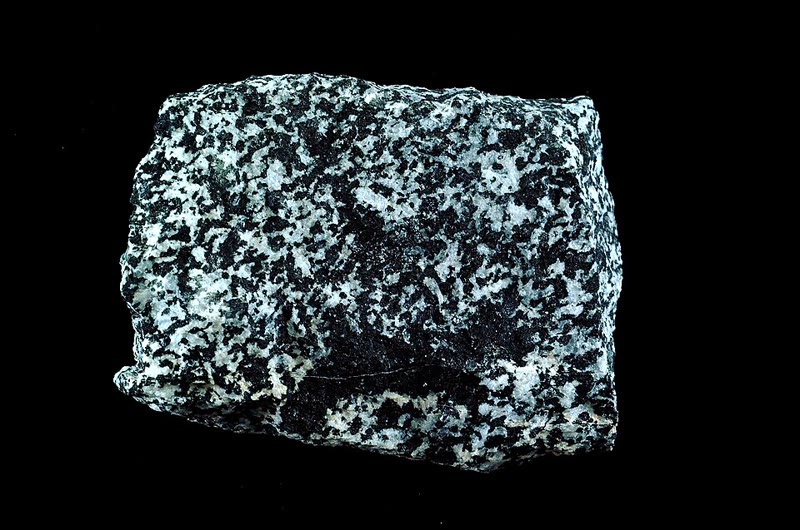
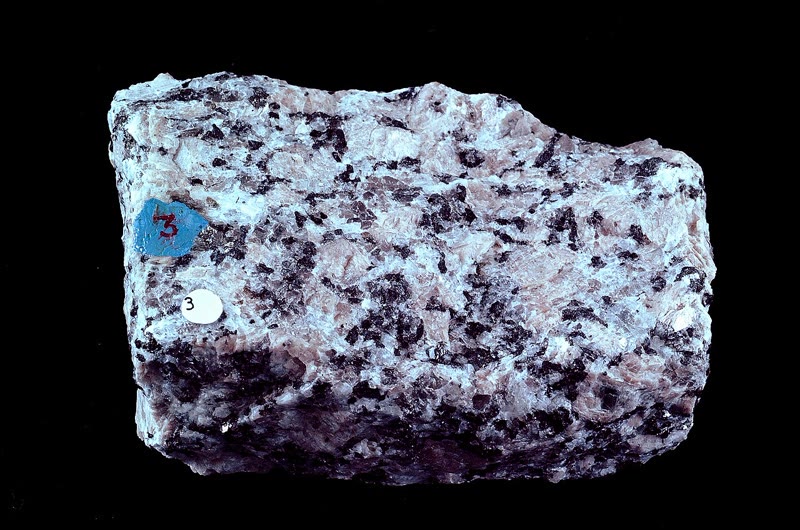
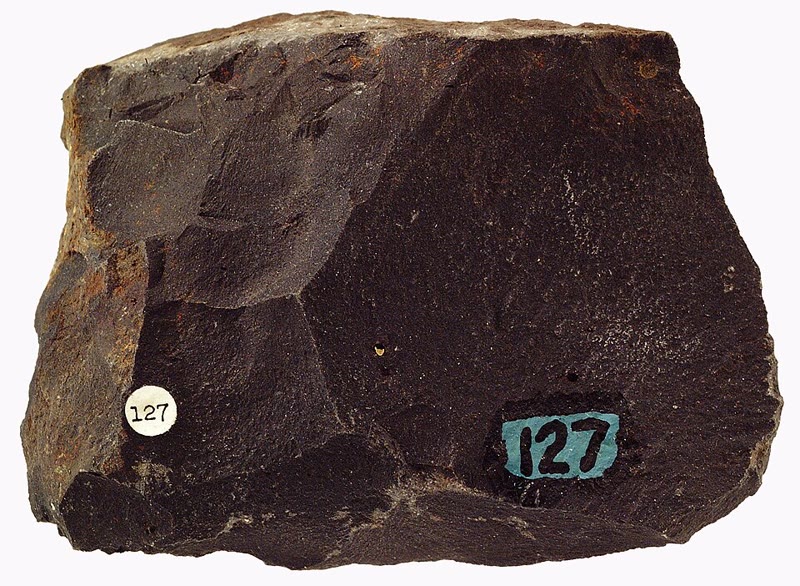
The three pairs of igneous rocks, mafic to felsic from left to right: volcanic above, plutonic below. Top: a fine-grained basalt; an andesite, small amphibole crystals in a fine-grained groundmass (about 10\, cm); a pink rhyolite. Bottom: gabbro (9\, cm); diorite, black hornblende and glassy plagioclase (10\, cm); a coarse granite with large pale pink potassium feldspars, grey plagioclase, quartz, biotite and hornblende (10\, cm). Photographs Nessa Eull, Twyla Baker, Joseph H. Hartman, Darla Sondrol and Dexter Perkins, Geology Digital Image Library (CC0). The three pairs of igneous rocks, mafic to felsic from left to right: volcanic above, plutonic below. Top: a fine-grained basalt; an andesite, small amphibole crystals in a fine-grained groundmass (about 10\, cm); a pink rhyolite. Bottom: gabbro (9\, cm); diorite, black hornblende and glassy plagioclase (10\, cm); a coarse granite with large pale pink potassium feldspars, grey plagioclase, quartz, biotite and hornblende (10\, cm). Photographs Nessa Eull, Twyla Baker, Joseph H. Hartman, Darla Sondrol and Dexter Perkins, Geology Digital Image Library (CC0). The three pairs of igneous rocks, mafic to felsic from left to right: volcanic above, plutonic below. Top: a fine-grained basalt; an andesite, small amphibole crystals in a fine-grained groundmass (about 10\, cm); a pink rhyolite. Bottom: gabbro (9\, cm); diorite, black hornblende and glassy plagioclase (10\, cm); a coarse granite with large pale pink potassium feldspars, grey plagioclase, quartz, biotite and hornblende (10\, cm). Photographs Nessa Eull, Twyla Baker, Joseph H. Hartman, Darla Sondrol and Dexter Perkins, Geology Digital Image Library (CC0). The three pairs of igneous rocks, mafic to felsic from left to right: volcanic above, plutonic below. Top: a fine-grained basalt; an andesite, small amphibole crystals in a fine-grained groundmass (about 10\, cm); a pink rhyolite. Bottom: gabbro (9\, cm); diorite, black hornblende and glassy plagioclase (10\, cm); a coarse granite with large pale pink potassium feldspars, grey plagioclase, quartz, biotite and hornblende (10\, cm). Photographs Nessa Eull, Twyla Baker, Joseph H. Hartman, Darla Sondrol and Dexter Perkins, Geology Digital Image Library (CC0). The three pairs of igneous rocks, mafic to felsic from left to right: volcanic above, plutonic below. Top: a fine-grained basalt; an andesite, small amphibole crystals in a fine-grained groundmass (about 10\, cm); a pink rhyolite. Bottom: gabbro (9\, cm); diorite, black hornblende and glassy plagioclase (10\, cm); a coarse granite with large pale pink potassium feldspars, grey plagioclase, quartz, biotite and hornblende (10\, cm). Photographs Nessa Eull, Twyla Baker, Joseph H. Hartman, Darla Sondrol and Dexter Perkins, Geology Digital Image Library (CC0). The three pairs of igneous rocks, mafic to felsic from left to right: volcanic above, plutonic below. Top: a fine-grained basalt; an andesite, small amphibole crystals in a fine-grained groundmass (about 10\, cm); a pink rhyolite. Bottom: gabbro (9\, cm); diorite, black hornblende and glassy plagioclase (10\, cm); a coarse granite with large pale pink potassium feldspars, grey plagioclase, quartz, biotite and hornblende (10\, cm). Photographs Nessa Eull, Twyla Baker, Joseph H. Hartman, Darla Sondrol and Dexter Perkins, Geology Digital Image Library (CC0).
The three pairs of igneous rocks, mafic to felsic from left to right: volcanic above, plutonic below. Top: a fine-grained basalt; an andesite, small amphibole crystals in a fine-grained groundmass (about 10 cm10\,\mathrm{cm}); a pink rhyolite. Bottom: gabbro (9 cm9\,\mathrm{cm}); diorite, black hornblende and glassy plagioclase (10 cm10\,\mathrm{cm}); a coarse granite with large pale pink potassium feldspars, grey plagioclase, quartz, biotite and hornblende (10 cm10\,\mathrm{cm}). Photographs Nessa Eull, Twyla Baker, Joseph H. Hartman, Darla Sondrol and Dexter Perkins, Geology Digital Image Library (CC0).
Read in context →