
সব বই

পেশাদার

1 Markets I: The Ecosystem and Exchange-Traded Marketsবাজার অনলাইন 2 Markets II: Rates, FX and Creditবাজার অনলাইন 3 Markets III: Commodities, Energy and Cryptoবাজার অনলাইন 4 Quantitative Methodsপদ্ধতি অনলাইন 5 Derivatives and Volatilityডেরিভেটিভস অনলাইন 6 Rates, Credit, XVA and Riskসুদহার, ঋণ ও ঝুঁকি অনলাইন 7 Research Craft: Predictors, Backtests, Measurement, Portfoliosগবেষণা অনলাইন 8 Strategies I: Equities and Futuresকৌশল অনলাইন 9 Strategies II: Volatility, Relative Value, Macro and the Bank Desksকৌশল অনলাইন 10 Microstructure and Executionএক্সিকিউশন অনলাইন 11 Market Making and High-Frequency Tradingমার্কেট মেকিং অনলাইন 12 Machine Learning for Marketsমেশিন লার্নিং অনলাইন 13 Low-Latency Softwareপ্রযুক্তি অনলাইন 14 Networks, Hardware and Trading Infrastructureপ্রযুক্তি অনলাইন 15 Research, Data and Risk Platformsপ্রযুক্তি অনলাইন 16 The Desk and the Firmপ্রতিষ্ঠান অনলাইন 17 The Industry: Firms, Roles and Careersক্যারিয়ার অনলাইন 18 Interviews I: Maths, Probability and Speedক্যারিয়ার অনলাইন 19 Interviews II: Markets, Trading Games and the Final Roundক্যারিয়ার অনলাইন 20 Interviews III: Codeক্যারিয়ার অনলাইন
অ্যাপ পরিচিতি Coach সাইন ইন পড়া শুরু করো

বইগুলো এখনো বাংলা ভাষায় পাওয়া যায় না — ইংরেজি সংস্করণ দেখানো হচ্ছে।

Earth and Space Sciences · পরিভাষা

Climate feedback কী?

Definition 28.12 High School Earth and Space Sciences · অধ্যায় 28 — Climate Change: Observations, Causes and Projections

A climate feedback is a change in the climate system, caused by a change in temperature, that alters the energy budget and so the temperature change itself. A positive feedback amplifies the initial change; a negative feedback damps it.
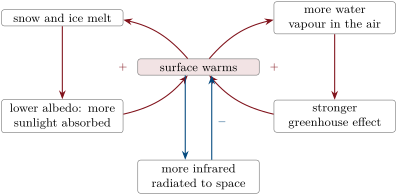
Two positive feedbacks (red loops) amplify a warming; the extra infrared radiated by a warmer planet (blue) is a negative feedback that limits it.

উদাহরণ

Example 28.13 (Three feedbacks)

  • Water vapour (positive). Warmer air holds more water vapour, a greenhouse gas, which adds to the warming.
  • Snow and ice (positive). Snow and ice reflect sunlight; when they melt, the darker land and sea beneath absorb more of it, and the warming grows.
  • Radiation to space (negative). A warmer surface and atmosphere radiate more infrared to space. This basic response always wins in the end: it is why the climate settles at a new, warmer balance instead of warming without limit.
প্রসঙ্গসহ পড়ো →