সব বই

পেশাদার

1 Markets I: The Ecosystem and Exchange-Traded Marketsবাজার অনলাইন 2 Markets II: Rates, FX and Creditবাজার অনলাইন 3 Markets III: Commodities, Energy and Cryptoবাজার অনলাইন 4 Quantitative Methodsপদ্ধতি অনলাইন 5 Derivatives and Volatilityডেরিভেটিভস অনলাইন 6 Rates, Credit, XVA and Riskসুদহার, ঋণ ও ঝুঁকি অনলাইন 7 Research Craft: Predictors, Backtests, Measurement, Portfoliosগবেষণা অনলাইন 8 Strategies I: Equities and Futuresকৌশল অনলাইন 9 Strategies II: Volatility, Relative Value, Macro and the Bank Desksকৌশল অনলাইন 10 Microstructure and Executionএক্সিকিউশন অনলাইন 11 Market Making and High-Frequency Tradingমার্কেট মেকিং অনলাইন 12 Machine Learning for Marketsমেশিন লার্নিং অনলাইন 13 Low-Latency Softwareপ্রযুক্তি অনলাইন 14 Networks, Hardware and Trading Infrastructureপ্রযুক্তি অনলাইন 15 Research, Data and Risk Platformsপ্রযুক্তি অনলাইন 16 The Desk and the Firmপ্রতিষ্ঠান অনলাইন 17 The Industry: Firms, Roles and Careersক্যারিয়ার অনলাইন 18 Interviews I: Maths, Probability and Speedক্যারিয়ার অনলাইন 19 Interviews II: Markets, Trading Games and the Final Roundক্যারিয়ার অনলাইন 20 Interviews III: Codeক্যারিয়ার অনলাইন
অ্যাপ পরিচিতি Coach সাইন ইন পড়া শুরু করো

বইগুলো এখনো বাংলা ভাষায় পাওয়া যায় না — ইংরেজি সংস্করণ দেখানো হচ্ছে।

Earth and Space Sciences · পরিভাষা

Longitude of perihelion; climatic precession কী?

অন্য নাম: longitude of perihelion · climatic precession

Definition 25.1 University Earth and Space Sciences — Year 2 · অধ্যায় 25 — Orbital Forcing and the Ice Ages

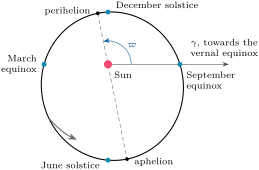
The longitude of perihelion ϖ\varpi is the angle, measured in the plane of the orbit from the direction of the vernal equinox, between that direction and the direction of the perihelion seen from the Sun; it is counted from the moving equinox, so it changes with both the wobble of the axis and the turning of the orbit. The climatic precession is the quantity esin⁡ϖe\sin\varpi, also called the precession index.

The Earth’s orbit seen from the north side, with the eccentricity exaggerated to 0.3 and today’s longitude of perihelion, = 101.4. The Earth moves anticlockwise (arrow); the points mark its position at the equinoxes and solstices. The perihelion falls a few days after the December solstice, the aphelion a few days after the June solstice. Schematic.
The Earth’s orbit seen from the north side, with the eccentricity exaggerated to 0.3 and today’s longitude of perihelion, ϖ=101.4∘\varpi = 101.4{}^{\circ}. The Earth moves anticlockwise (arrow); the points mark its position at the equinoxes and solstices. The perihelion falls a few days after the December solstice, the aphelion a few days after the June solstice. Schematic.
প্রসঙ্গসহ পড়ো →