 Coach
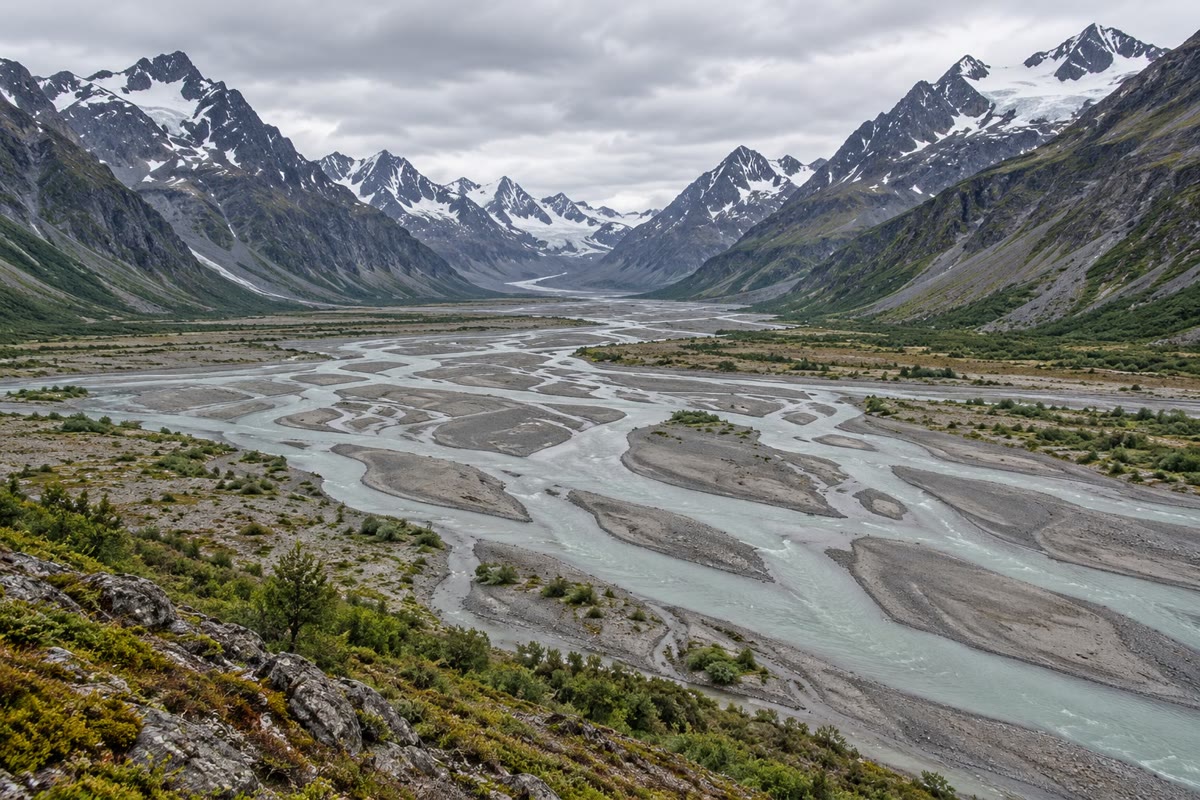
The sediment load of a river is the material it carries, in three forms: the bed load, large grains rolled, pushed or bounced along the bottom; the suspended load, small grains held up in the moving water; and the dissolved load, ions in solution, such as calcium and chloride, left by chemical weathering.
示例
Example 23.4 (The Mississippi)
Before 1900, the Missouri–Mississippi river system carried about 400 million tonnes of sediment a year to the sea, from a basin of about . With the dissolved load, million tonnes, that is of rock a year. Spread over , it is a layer
Between 1987 and 2006 the river carried only 145 million tonnes a year, which gives about : dams built on the Missouri in the 1950s trap about 100 to 150 million tonnes a year, and other works hold back more.