
सभी किताबें

पेशेवर

1 Markets I: The Ecosystem and Exchange-Traded Marketsबाज़ार ऑनलाइन 2 Markets II: Rates, FX and Creditबाज़ार ऑनलाइन 3 Markets III: Commodities, Energy and Cryptoबाज़ार ऑनलाइन 4 Quantitative Methodsविधियाँ ऑनलाइन 5 Derivatives and Volatilityडेरिवेटिव्स ऑनलाइन 6 Rates, Credit, XVA and Riskब्याज दरें, क्रेडिट और जोखिम ऑनलाइन 7 Research Craft: Predictors, Backtests, Measurement, Portfoliosअनुसंधान ऑनलाइन 8 Strategies I: Equities and Futuresरणनीतियाँ ऑनलाइन 9 Strategies II: Volatility, Relative Value, Macro and the Bank Desksरणनीतियाँ ऑनलाइन 10 Microstructure and Executionनिष्पादन ऑनलाइन 11 Market Making and High-Frequency Tradingमार्केट मेकिंग ऑनलाइन 12 Machine Learning for Marketsमशीन लर्निंग ऑनलाइन 13 Low-Latency Softwareतकनीक ऑनलाइन 14 Networks, Hardware and Trading Infrastructureतकनीक ऑनलाइन 15 Research, Data and Risk Platformsतकनीक ऑनलाइन 16 The Desk and the Firmफ़र्म ऑनलाइन 17 The Industry: Firms, Roles and Careersकरियर ऑनलाइन 18 Interviews I: Maths, Probability and Speedकरियर ऑनलाइन 19 Interviews II: Markets, Trading Games and the Final Roundकरियर ऑनलाइन 20 Interviews III: Codeकरियर ऑनलाइन
ऐप्स परिचय Coach लॉग इन पढ़ना शुरू करें

Quantitative Finance · शब्दावली

Bund and syndication क्या है?

अन्य नाम: Bund · syndication

Definition 7.2 Markets II: Rates, FX and Credit · अध्याय 7 — European and Japanese Government Bonds

A Bund is a German federal government bond (Bundesanleihe), issued at 7, 10, 15 or 30 years with an annual coupon; the ten-year Bund’s yield is the euro area’s benchmark long rate. Syndication is the sale of a new bond through a group of banks that build a book of investor orders and set the price, instead of an auction; some issuers use it for new long bonds, where demand is hardest to predict.
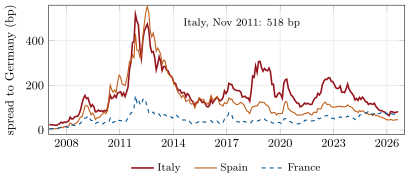
Ten-year spreads to Germany, monthly averages, 2007 to August 2026. The sovereign debt crisis took Italy’s to 518 basis points in November 2011 and Spain’s to 555 in July 2012; spreads fell after the ECB announced outright monetary transactions in September 2012. By August 2026 France’s spread, 82 basis points, was slightly wider than Italy’s, 81. Data: OECD, via FRED.
Figure 7.1. Ten-year spreads to Germany, monthly averages, 2007 to August 2026. The sovereign debt crisis took Italy’s to 518 basis points in November 2011 and Spain’s to 555 in July 2012; spreads fell after the ECB announced outright monetary transactions in September 2012. By August 2026 France’s spread, 82 basis points, was slightly wider than Italy’s, 81. Data: OECD, via FRED.

उदाहरण

Example 7.3 (Anatomy of a widening)

Between June and November 2011 (monthly averages) Italy’s ten-year spread to Germany widened by 326 basis points. Italy’s yield rose 224 basis points; the other 102 came from Germany’s yield falling by as much, as investors fled into Bunds. A spread measures relative credit, but half of a crisis widening can be the benchmark rallying: a hedge that shorts the benchmark against the spread loses on that half.

अध्याय में पढ़ें →