
جميع الكتب

مهني

1 Markets I: The Ecosystem and Exchange-Traded Marketsالأسواق عبر الإنترنت 2 Markets II: Rates, FX and Creditالأسواق عبر الإنترنت 3 Markets III: Commodities, Energy and Cryptoالأسواق عبر الإنترنت 4 Quantitative Methodsالأساليب عبر الإنترنت 5 Derivatives and Volatilityالمشتقات عبر الإنترنت 6 Rates, Credit, XVA and Riskالفائدة والائتمان والمخاطر عبر الإنترنت 7 Research Craft: Predictors, Backtests, Measurement, Portfoliosالبحث عبر الإنترنت 8 Strategies I: Equities and Futuresالاستراتيجيات عبر الإنترنت 9 Strategies II: Volatility, Relative Value, Macro and the Bank Desksالاستراتيجيات عبر الإنترنت 10 Microstructure and Executionالتنفيذ عبر الإنترنت 11 Market Making and High-Frequency Tradingصناعة السوق عبر الإنترنت 12 Machine Learning for Marketsتعلم الآلة عبر الإنترنت 13 Low-Latency Softwareالتكنولوجيا عبر الإنترنت 14 Networks, Hardware and Trading Infrastructureالتكنولوجيا عبر الإنترنت 15 Research, Data and Risk Platformsالتكنولوجيا عبر الإنترنت 16 The Desk and the Firmالشركة عبر الإنترنت 17 The Industry: Firms, Roles and Careersالمسارات المهنية عبر الإنترنت 18 The Interview Bookالمسارات المهنية عبر الإنترنت
التطبيقات حول المدرب تسجيل الدخول ابدأ القراءة

Quantitative Finance · المسرد

ما معنى Caplet stripping؟

Definition 4.5 Rates, Credit, XVA and Risk · الفصل 4 — Vanilla Rates Options

Caplet stripping is the calibration of a term structure of caplet volatilities that reprices every quoted cap of a strike: with caps of increasing maturity, the caplets between two consecutive maturities are given one volatility, solved so that the longer cap reprices, the shorter caplets’ volatilities held.
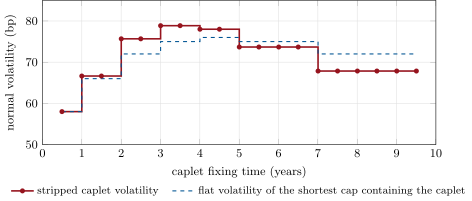
Caplet volatilities stripped from the flat volatilities of caps struck at 3%, one per interval between quoted maturities. Data: the chapter’s illustrative quotes on chapter 2’s euro curves; the chapter’s tutorial.
Figure 4.2. Caplet volatilities stripped from the flat volatilities of caps struck at 3%, one per interval between quoted maturities. Data: the chapter’s illustrative quotes on chapter 2’s euro curves; the chapter’s tutorial.
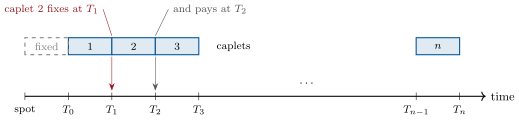
A cap on six-month Euribor from spot: each caplet’s rate fixes at the start of its period and is paid at the end. The first period’s rate is already fixed at trade, so the market’s caps start with the second caplet.
Figure 4.3. A cap on six-month Euribor from spot: each caplet’s rate fixes at the start of its period and is paid at the end. The first period’s rate is already fixed at trade, so the market’s caps start with the second caplet.

أمثلة

Example 4.6 (A euro cap strip)

Flat normal volatilities of caps struck at 3% on six-month Euribor of 58, 66, 72, 75, 76, 75 and 72 basis points at one, two, three, four, five, seven and ten years (illustrative; the first caplet, already fixed, excluded) strip into caplet volatilities of 58.0, 66.6, 75.7, 78.9, 78.0, 73.7 and 67.9 basis points on the successive intervals (Figure 4.2). Where flat volatilities rise, the new caplets must be above the flat level to lift the average; the hump of the caplet curve is higher and earlier than that of the flat curve.

اقرأ في الفصل →