
सभी किताबें

पेशेवर

1 Markets I: The Ecosystem and Exchange-Traded Marketsबाज़ार ऑनलाइन 2 Markets II: Rates, FX and Creditबाज़ार ऑनलाइन 3 Markets III: Commodities, Energy and Cryptoबाज़ार ऑनलाइन 4 Quantitative Methodsविधियाँ ऑनलाइन 5 Derivatives and Volatilityडेरिवेटिव्स ऑनलाइन 6 Rates, Credit, XVA and Riskब्याज दरें, क्रेडिट और जोखिम ऑनलाइन 7 Research Craft: Predictors, Backtests, Measurement, Portfoliosअनुसंधान ऑनलाइन 8 Strategies I: Equities and Futuresरणनीतियाँ ऑनलाइन 9 Strategies II: Volatility, Relative Value, Macro and the Bank Desksरणनीतियाँ ऑनलाइन 10 Microstructure and Executionनिष्पादन ऑनलाइन 11 Market Making and High-Frequency Tradingमार्केट मेकिंग ऑनलाइन 12 Machine Learning for Marketsमशीन लर्निंग ऑनलाइन 13 Low-Latency Softwareतकनीक ऑनलाइन 14 Networks, Hardware and Trading Infrastructureतकनीक ऑनलाइन 15 Research, Data and Risk Platformsतकनीक ऑनलाइन 16 The Desk and the Firmफ़र्म ऑनलाइन 17 The Industry: Firms, Roles and Careersकरियर ऑनलाइन 18 Interviews I: Maths, Probability and Speedकरियर ऑनलाइन 19 Interviews II: Markets, Trading Games and the Final Roundकरियर ऑनलाइन 20 Interviews III: Codeकरियर ऑनलाइन
ऐप्स परिचय Coach लॉग इन पढ़ना शुरू करें

Quantitative Finance · शब्दावली

Day-one P&L क्या है?

अन्य नाम: day-one P\&L

Definition 27.8 Derivatives and Volatility · अध्याय 27 — Managing an Exotic Book

The day-one P&L of a trade is the difference, at inception, between its transaction price and its fair value; under IFRS 9 it is recognised at once only if the fair value is evidenced by a Level 1 price or by a valuation using only observable data, and is otherwise deferred and recognised later only as a factor that market participants would price, including time, changes.
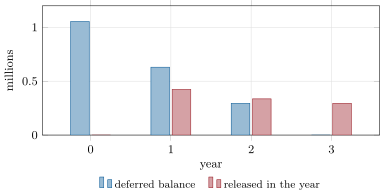
The deferred part of the note’s day-one margin: 1.054 million held back at inception, released as the correlation becomes observable and the note shortens (indices assumed at 95% at each anniversary). Data: the tutorial.
Figure 27.4. The deferred part of the note’s day-one margin: 1.054 million held back at inception, released as the correlation becomes observable and the note shortens (indices assumed at 95% at each anniversary). Data: the tutorial.

उदाहरण

Example 27.9 (The deferred profit)

Per 100 million of notes sold at par: margin 2.000 million; bid–offer reserve 0.621; deferred 1.054 (model 0.621, correlation 0.433); recognised at inception 0.325. After one year, with both indices at 95% and the note alive, the correlation trades within 0.47–0.53 and the note has two years left. The correlation reserve falls to 0.071 and the model reserve to 0.559: 0.424 million is released, 0.362 of it from the correlation. After two years, with the indices still at 95%, another 0.336 comes back, and the last 0.295 at maturity (Figure 27.4).

अध्याय में पढ़ें →