 Coach
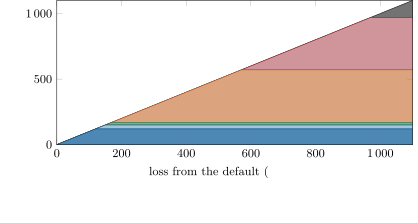
CoachThe default fund is a pool of collateral contributed by all members to absorb losses that exceed a defaulter’s own resources. The default waterfall is the order in which resources absorb the loss from a member’s default:
- the defaulter’s initial margin;
- the defaulter’s contribution to the default fund;
- a tranche of the CCP’s own capital (its “skin in the game”);
- the surviving members’ default-fund contributions;
- further assessments the CCP may call from survivors, up to a cap.
Voorbeelden
Example 5.12 (September 2008)
When Lehman Brothers defaulted on Monday 15 September 2008, the London clearing house for interest-rate swaps held its portfolio: 66 390 trades with a notional value of $9 trillion in five currencies, against about $2 billion of initial margin. Traders seconded from member banks hedged the portfolio alongside the clearing house’s risk team; between 24 September and 3 October the hedged currency portfolios were auctioned. The clearing house reported that the default was managed well within the margin held and that its default fund was not used. The episode became the standard argument for the clearing mandates that followed.