
جميع الكتب

مهني

1 Markets I: The Ecosystem and Exchange-Traded Marketsالأسواق عبر الإنترنت 2 Markets II: Rates, FX and Creditالأسواق عبر الإنترنت 3 Markets III: Commodities, Energy and Cryptoالأسواق عبر الإنترنت 4 Quantitative Methodsالأساليب عبر الإنترنت 5 Derivatives and Volatilityالمشتقات عبر الإنترنت 6 Rates, Credit, XVA and Riskالفائدة والائتمان والمخاطر عبر الإنترنت 7 Research Craft: Predictors, Backtests, Measurement, Portfoliosالبحث عبر الإنترنت 8 Strategies I: Equities and Futuresالاستراتيجيات عبر الإنترنت 9 Strategies II: Volatility, Relative Value, Macro and the Bank Desksالاستراتيجيات عبر الإنترنت 10 Microstructure and Executionالتنفيذ عبر الإنترنت 11 Market Making and High-Frequency Tradingصناعة السوق عبر الإنترنت 12 Machine Learning for Marketsتعلم الآلة عبر الإنترنت 13 Low-Latency Softwareالتكنولوجيا عبر الإنترنت 14 Networks, Hardware and Trading Infrastructureالتكنولوجيا عبر الإنترنت 15 Research, Data and Risk Platformsالتكنولوجيا عبر الإنترنت 16 The Desk and the Firmالشركة عبر الإنترنت 17 The Industry: Firms, Roles and Careersالمسارات المهنية عبر الإنترنت 18 The Interview Bookالمسارات المهنية عبر الإنترنت
التطبيقات حول المدرب تسجيل الدخول ابدأ القراءة

Quantitative Finance · المسرد

ما معنى Dense price ladder؟

Definition 19.2 Low-Latency Software · الفصل 19 — The Order Book Builder

A dense price ladder keeps the price levels of a book in an array indexed by the distance in ticks from a base price, one slot per tick whether or not a level exists there, covering a window around the touch; levels outside the window live in a sparse structure, and the window is moved (recentred) when the touch approaches its edge.
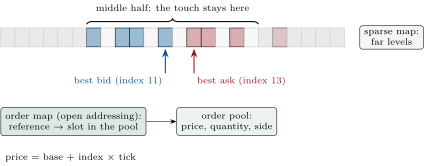
The build’s book. Levels live in a dense array indexed by ticks from a base price (blue: bids, red: asks, grey: empty); the best bid and ask are indices kept up to date. When a best price leaves the middle half of the array, the base is moved to centre the touch and the orders are filed again. Orders are found through an open-addressing map from their reference to a slot in a fixed pool.
Figure 19.1. The build’s book. Levels live in a dense array indexed by ticks from a base price (blue: bids, red: asks, grey: empty); the best bid and ask are indices kept up to date. When a best price leaves the middle half of the array, the base is moved to centre the touch and the orders are filed again. Orders are found through an open-addressing map from their reference to a slot in a fixed pool.
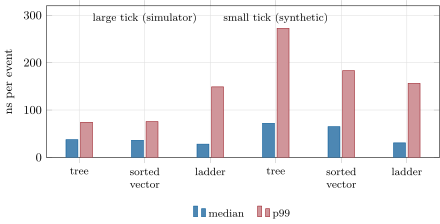
Time to apply one event with three book structures, on the simulator’s minute of chapter 18 (a large-tick instrument, about 190 000 events) and on 100 000 synthetic small-tick events (orders up to 300 ticks from the mid). The timer’s own cost is subtracted. Measured on a laptop (Intel Core Ultra 7 155H) under WSL2, no isolated cores. Data: bench_books.py.
Figure 19.2. Time to apply one event with three book structures, on the simulator’s minute of chapter 18 (a large-tick instrument, about 190 000 events) and on 100 000 synthetic small-tick events (orders up to 300 ticks from the mid). The timer’s own cost is subtracted. Measured on a laptop (Intel Core Ultra 7 155H) under WSL2, no isolated cores. Data: bench_books.py.
اقرأ في الفصل →