
جميع الكتب

مهني

1 Markets I: The Ecosystem and Exchange-Traded Marketsالأسواق عبر الإنترنت 2 Markets II: Rates, FX and Creditالأسواق عبر الإنترنت 3 Markets III: Commodities, Energy and Cryptoالأسواق عبر الإنترنت 4 Quantitative Methodsالأساليب عبر الإنترنت 5 Derivatives and Volatilityالمشتقات عبر الإنترنت 6 Rates, Credit, XVA and Riskالفائدة والائتمان والمخاطر عبر الإنترنت 7 Research Craft: Predictors, Backtests, Measurement, Portfoliosالبحث عبر الإنترنت 8 Strategies I: Equities and Futuresالاستراتيجيات عبر الإنترنت 9 Strategies II: Volatility, Relative Value, Macro and the Bank Desksالاستراتيجيات عبر الإنترنت 10 Microstructure and Executionالتنفيذ عبر الإنترنت 11 Market Making and High-Frequency Tradingصناعة السوق عبر الإنترنت 12 Machine Learning for Marketsتعلم الآلة عبر الإنترنت 13 Low-Latency Softwareالتكنولوجيا عبر الإنترنت 14 Networks, Hardware and Trading Infrastructureالتكنولوجيا عبر الإنترنت 15 Research, Data and Risk Platformsالتكنولوجيا عبر الإنترنت 16 The Desk and the Firmالشركة عبر الإنترنت 17 The Industry: Firms, Roles and Careersالمسارات المهنية عبر الإنترنت 18 The Interview Bookالمسارات المهنية عبر الإنترنت
التطبيقات حول المدرب تسجيل الدخول ابدأ القراءة

Quantitative Finance · المسرد

ما معنى First-passage model, default barrier؟

يُعرف أيضًا باسم: first-passage model · default barrier

Definition 14.7 Rates, Credit, XVA and Risk · الفصل 14 — Structural Credit Models

A first-passage model defaults the firm the first time its assets touch a default barrier BtB_t below the current value, whenever that happens, instead of only at the debt’s maturity. A barrier stands for covenants that let creditors take over, or for the level at which the firm can no longer refinance. The CreditGrades model (2002), published by RiskMetrics with three dealers, puts the barrier at the average recovery on debt times the debt per share and makes that recovery lognormally uncertain, so that default can come as a surprise and short spreads are not zero.
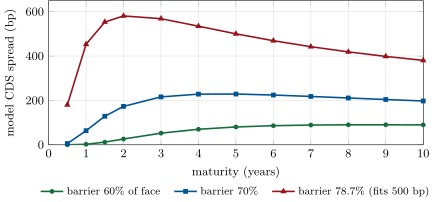
Model default-swap spreads of the chapter’s firm in the first-passage model, for three barriers. Raising the barrier lifts the curve and moves its hump to shorter maturities; the highest barrier fits a five-year quote of 500 basis points. Data: the chapter’s tutorial.
Figure 14.3. Model default-swap spreads of the chapter’s firm in the first-passage model, for three barriers. Raising the barrier lifts the curve and moves its hump to shorter maturities; the highest barrier fits a five-year quote of 500 basis points. Data: the chapter’s tutorial.

أمثلة

Example 14.9 (The firm under a barrier)

With the barrier at 70% of the debt face, the firm’s model default-swap spreads are 64, 173, 216, 229 and 197 basis points at one, two, three, five and ten years (Figure 14.3); its five-year survival probability is 82.3%. A market quote of 500 basis points at five years needs a barrier at 78.7% of the face.

اقرأ في الفصل →