
جميع الكتب

مهني

1 Markets I: The Ecosystem and Exchange-Traded Marketsالأسواق عبر الإنترنت 2 Markets II: Rates, FX and Creditالأسواق عبر الإنترنت 3 Markets III: Commodities, Energy and Cryptoالأسواق عبر الإنترنت 4 Quantitative Methodsالأساليب عبر الإنترنت 5 Derivatives and Volatilityالمشتقات عبر الإنترنت 6 Rates, Credit, XVA and Riskالفائدة والائتمان والمخاطر عبر الإنترنت 7 Research Craft: Predictors, Backtests, Measurement, Portfoliosالبحث عبر الإنترنت 8 Strategies I: Equities and Futuresالاستراتيجيات عبر الإنترنت 9 Strategies II: Volatility, Relative Value, Macro and the Bank Desksالاستراتيجيات عبر الإنترنت 10 Microstructure and Executionالتنفيذ عبر الإنترنت 11 Market Making and High-Frequency Tradingصناعة السوق عبر الإنترنت 12 Machine Learning for Marketsتعلم الآلة عبر الإنترنت 13 Low-Latency Softwareالتكنولوجيا عبر الإنترنت 14 Networks, Hardware and Trading Infrastructureالتكنولوجيا عبر الإنترنت 15 Research, Data and Risk Platformsالتكنولوجيا عبر الإنترنت 16 The Desk and the Firmالشركة عبر الإنترنت 17 The Industry: Firms, Roles and Careersالمسارات المهنية عبر الإنترنت 18 The Interview Bookالمسارات المهنية عبر الإنترنت
التطبيقات حول المدرب تسجيل الدخول ابدأ القراءة

Quantitative Finance · المسرد

ما معنى Imbalance bar؟

Definition 2.2 Research Craft: Predictors, Backtests, Measurement, Portfolios · الفصل 2 — Market Data for Research

An imbalance bar closes when the absolute sum of the trade signs since its start, ∣θ∣=∣∑bi∣|\theta| = |\sum b_i|, reaches a threshold set from the bars already closed: the expected number of trades per bar times the expected absolute imbalance per trade (López de Prado’s tick-imbalance bar), floored at the square root of the expected number of trades.
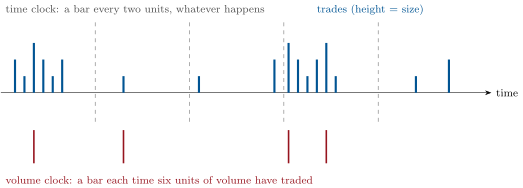
The same seventeen trades cut by two clocks. The time clock closes five equal intervals (dashed): three nearly empty, one holding the early burst and one the burst between t = 6 and 7. The volume clock (solid, below) closes four bars: two short ones inside the bursts, ending at 0.7 and 6.9, and two long ones that absorb the quiet stretches; the last three trades wait for the next bar.
Figure 2.1. The same seventeen trades cut by two clocks. The time clock closes five equal intervals (dashed): three nearly empty, one holding the early burst and one the burst between t=6t = 6 and 7. The volume clock (solid, below) closes four bars: two short ones inside the bursts, ending at 0.7 and 6.9, and two long ones that absorb the quiet stretches; the last three trades wait for the next bar.
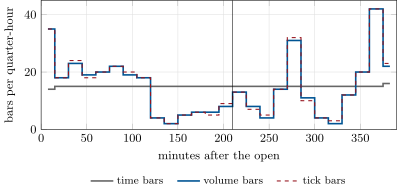
Bars closed per quarter-hour on the simulated day, each clock cutting about 390 bars. The time clock closes 15 bars in every quarter-hour; the volume and tick clocks follow the activity: busy after the open, quiet in the middle of the day, busy around the news burst at minute 210 (vertical line) and before the close. Dollar bars coincide with volume bars at this scale. Data: firm.tape, the chapter’s day, seeded.
Figure 2.2. Bars closed per quarter-hour on the simulated day, each clock cutting about 390 bars. The time clock closes 15 bars in every quarter-hour; the volume and tick clocks follow the activity: busy after the open, quiet in the middle of the day, busy around the news burst at minute 210 (vertical line) and before the close. Dollar bars coincide with volume bars at this scale. Data: firm.tape, the chapter’s day, seeded.
اقرأ في الفصل →