 Coach
CoachA netting set is the group of trades with one counterparty under one legally enforceable master agreement. Close-out netting lets the surviving party terminate every trade of the netting set on default and set the values off against each other into one net amount, so the exposure is , not .
Examples
Example 17.6 (The netting benefit)
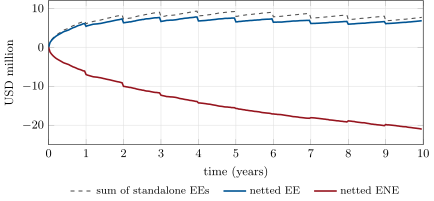
Netted, the two trades of Example 17.4 have an EE that peaks at USD 7.77 million after 3.9 years, where the two standalone EEs add to USD 9.24 million: a 16% saving (Figure 17.2). The netting set’s ENE reaches million: the bank pays the lower-rate currency and the final exchange is at a forward rate above spot, so the trade drifts in the counterparty’s favour.
Example 17.10 (Collateralising the netting set)
Under a two-way CSA with zero threshold and a minimum transfer amount of USD 500 000, the netting set’s EE falls to a nearly flat USD 1.30 million at its peak and its PFE to USD 6.45 million with a margin period of risk of ten business days; the EPE over the life falls from USD 6.44 million to 0.95 million, 15% of the uncollateralised figure. With twenty days the peak EE is USD 1.83 million, times higher; with a threshold of USD 10 million it is USD 3.81 million (Figure 17.4).