
جميع الكتب

مهني

1 Markets I: The Ecosystem and Exchange-Traded Marketsالأسواق عبر الإنترنت 2 Markets II: Rates, FX and Creditالأسواق عبر الإنترنت 3 Markets III: Commodities, Energy and Cryptoالأسواق عبر الإنترنت 4 Quantitative Methodsالأساليب عبر الإنترنت 5 Derivatives and Volatilityالمشتقات عبر الإنترنت 6 Rates, Credit, XVA and Riskالفائدة والائتمان والمخاطر عبر الإنترنت 7 Research Craft: Predictors, Backtests, Measurement, Portfoliosالبحث عبر الإنترنت 8 Strategies I: Equities and Futuresالاستراتيجيات عبر الإنترنت 9 Strategies II: Volatility, Relative Value, Macro and the Bank Desksالاستراتيجيات عبر الإنترنت 10 Microstructure and Executionالتنفيذ عبر الإنترنت 11 Market Making and High-Frequency Tradingصناعة السوق عبر الإنترنت 12 Machine Learning for Marketsتعلم الآلة عبر الإنترنت 13 Low-Latency Softwareالتكنولوجيا عبر الإنترنت 14 Networks, Hardware and Trading Infrastructureالتكنولوجيا عبر الإنترنت 15 Research, Data and Risk Platformsالتكنولوجيا عبر الإنترنت 16 The Desk and the Firmالشركة عبر الإنترنت 17 The Industry: Firms, Roles and Careersالمسارات المهنية عبر الإنترنت 18 The Interview Bookالمسارات المهنية عبر الإنترنت
التطبيقات حول المدرب تسجيل الدخول ابدأ القراءة

Quantitative Finance · المسرد

ما معنى Pari passu clause؟

Definition 26.4 Markets II: Rates, FX and Credit · الفصل 26 — Distressed, Sovereign and Bank-Capital Credit

A pari passu clause states that a bond ranks equally with the issuer’s other unsecured debt of the same kind.
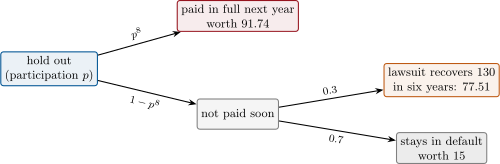
The holdout’s probability tree in the chapter’s example, values per 100 of old face discounted at 9%. The chance of being paid in full soon rises steeply with the share of creditors who tendered, since the sovereign can afford to pay a small remainder. Illustrative.
Figure 26.2. The holdout’s probability tree in the chapter’s example, values per 100 of old face discounted at 9%. The chance of being paid in full soon rises steeply with the share of creditors who tendered, since the sovereign can afford to pay a small remainder. Illustrative.
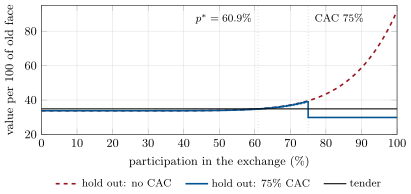
Value of holding out against the share of creditors who tender, without a collective action clause and with a 75% aggregated clause, and the value of tendering. Holding out pays above 60.9% participation; the clause removes the gain from 75%, where the holdout is bound to the offer and loses the cash paid to those who tendered. Illustrative; data: the chapter’s tutorial.
Figure 26.3. Value of holding out against the share of creditors who tender, without a collective action clause and with a 75% aggregated clause, and the value of tendering. Holding out pays above 60.9% participation; the clause removes the gain from 75%, where the holdout is bound to the offer and loses the cash paid to those who tendered. Illustrative; data: the chapter’s tutorial.

أمثلة

Example 26.6 (Where holding out pays)

In the tree of Figure 26.2, holding out is worth 33.75 if no one tenders, 34.73 at 60% participation and 38.97 at 74%, against 34.85 for tendering. It pays from a participation of 60.9%. With a 75% aggregated clause, at 75% or more the holdout is bound and receives the new bonds alone, 29.85: the band in which holding out pays is 60.9% to 75%. Without a clause it pays at any participation above 60.9%, and at 90% it is worth 58.72 (Figure 26.3).

اقرأ في الفصل →